 HWAMDA
What is a plastic injection mold?
A plastic injection mold is a precision steel tool that gives a plastic part its shape. It is mounted between the platens of an injection molding machine. The machine melts the plastic and injects it into the closed mold; the plastic fills the cavity, cools, and the mold opens so the part can be ejected. Then the cycle repeats.
The machine can run many different products. The mold is made for one product, or one family of parts, so every new bottle preform, crate, container or bucket needs its own mold. That is why the mold and the machine are specified together: the mold sets the part, the cavity count and much of the cycle time, and the machine must have the clamping force, shot size and mold space to run it.
Parts of an injection mold
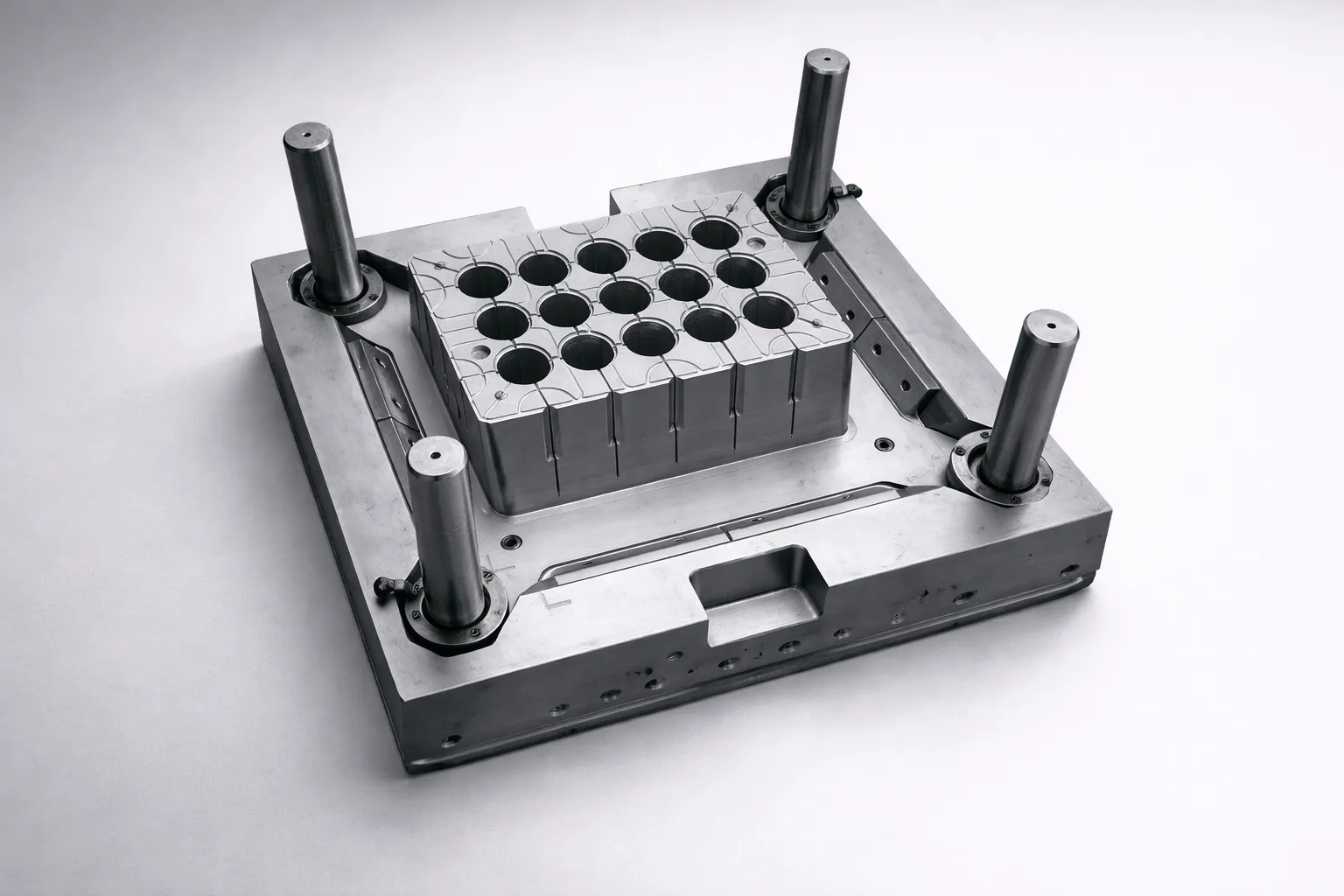
Every injection mold has two halves. The cavity half (fixed half) is mounted on the stationary platen on the injection side; the core half (moving half) is mounted on the moving platen and carries the ejection system. Inside them are the following parts.
- Mold base
- The plates, guide pillars and bushings that hold all the other parts in alignment. Usually made from P20 or a similar pre-hardened steel.
- Cavity
- The hollow that forms the outside of the part. Its finish is copied directly onto the part.
- Core
- The raised shape that forms the inside of the part. The part shrinks onto it as it cools, so it carries the ejection.
- Sprue, runners and gates
- The channels that take the melt from the machine nozzle to each cavity. The gate is the small opening where the plastic enters the part.
- Hot runner
- A heated manifold and nozzles that keep the plastic molten up to each gate, so no runner is molded and wasted. Standard on multi-cavity packaging and preform molds.
- Cooling channels
- Water circuits drilled through the core and cavity. Cooling takes the largest share of most cycles, so their layout largely decides the cycle time.
- Ejection system
- Ejector pins, sleeves, stripper plates or air valves that push the finished part off the core when the mold opens.
- Locating ring and sprue bushing
- Center the mold on the machine and seal against the nozzle.
- Vents
- Very shallow gaps that let air escape as the plastic fills the cavity, preventing burns and short shots.
Types of injection molds
Molds are grouped by how the plastic reaches the part, how many parts they make per cycle and how the part is released.
- Two-plate mold
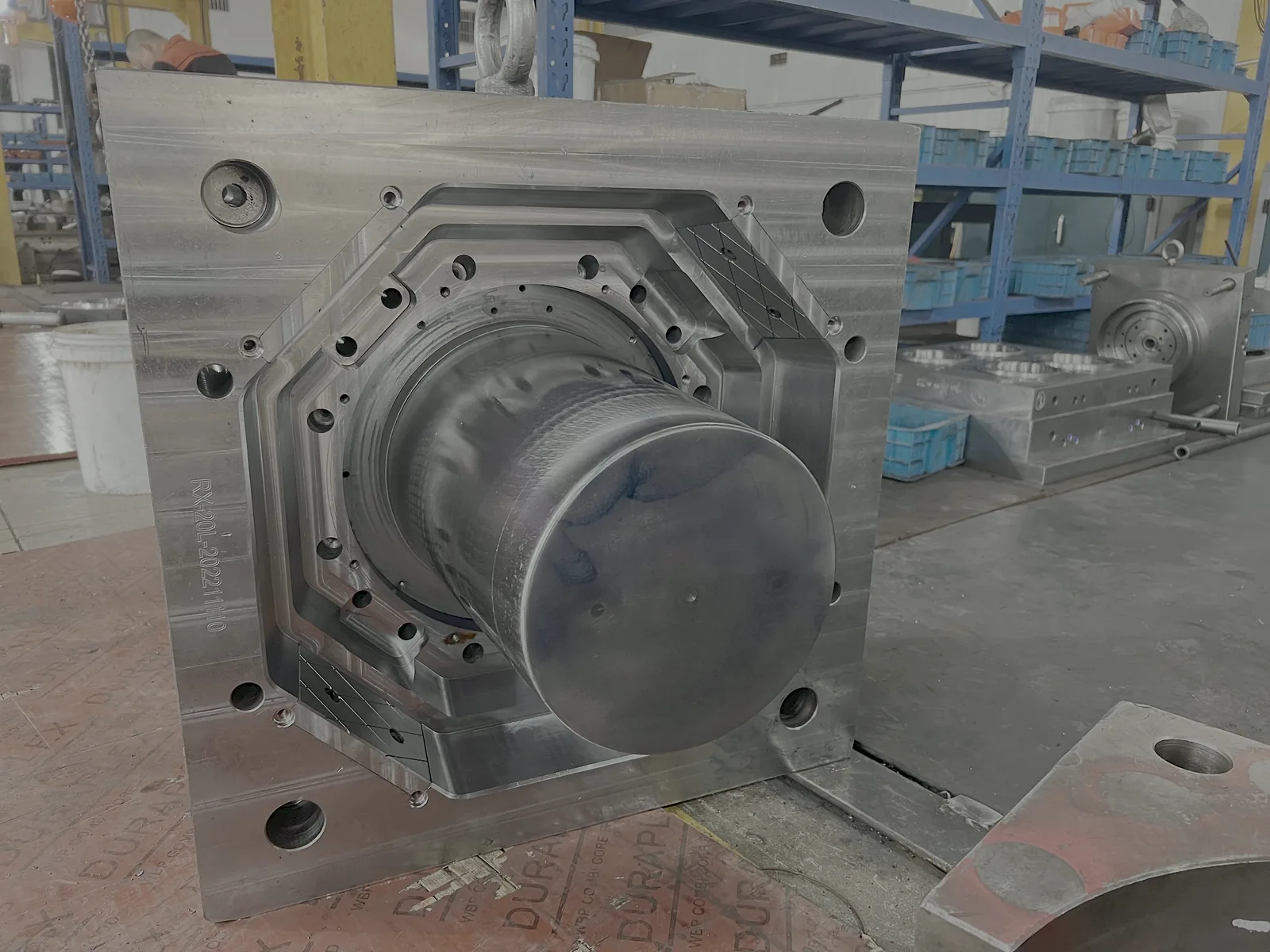
- The simplest design: one parting line, with the runner and parts ejected together. Common for large single parts.
- Three-plate mold
- A second parting line separates the runner from the parts automatically, allowing gates at the center of each part without a hot runner.
- Hot-runner mold
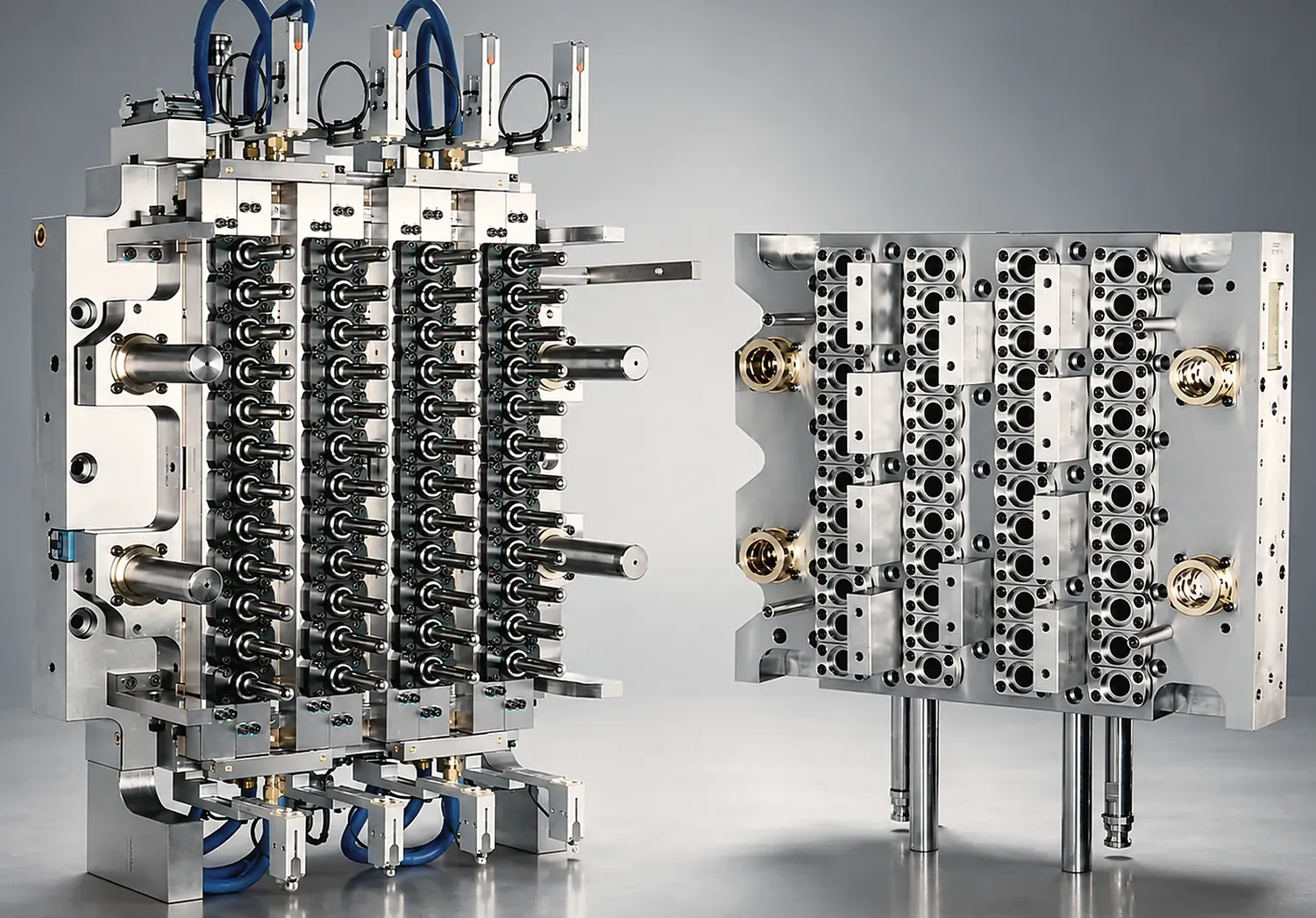
- The runner stays molten inside a heated manifold. No runner waste, shorter cycles and better balance between cavities. Used for preforms, thin-wall containers, cups and caps.
- Single-cavity and multi-cavity molds
- A multi-cavity mold makes several identical parts per cycle (for example 8 food containers or 72 preforms), multiplying output from the same machine.
- Molds with side actions
- Slides, lifters or unscrewing cores release undercuts, side holes and threads, as in crate handles or threaded pipe fittings.
- IML molds
- In-mold labeling molds hold a printed label in the cavity, so the part comes out decorated. Used for cups, food containers and buckets.
Mold steel and service life
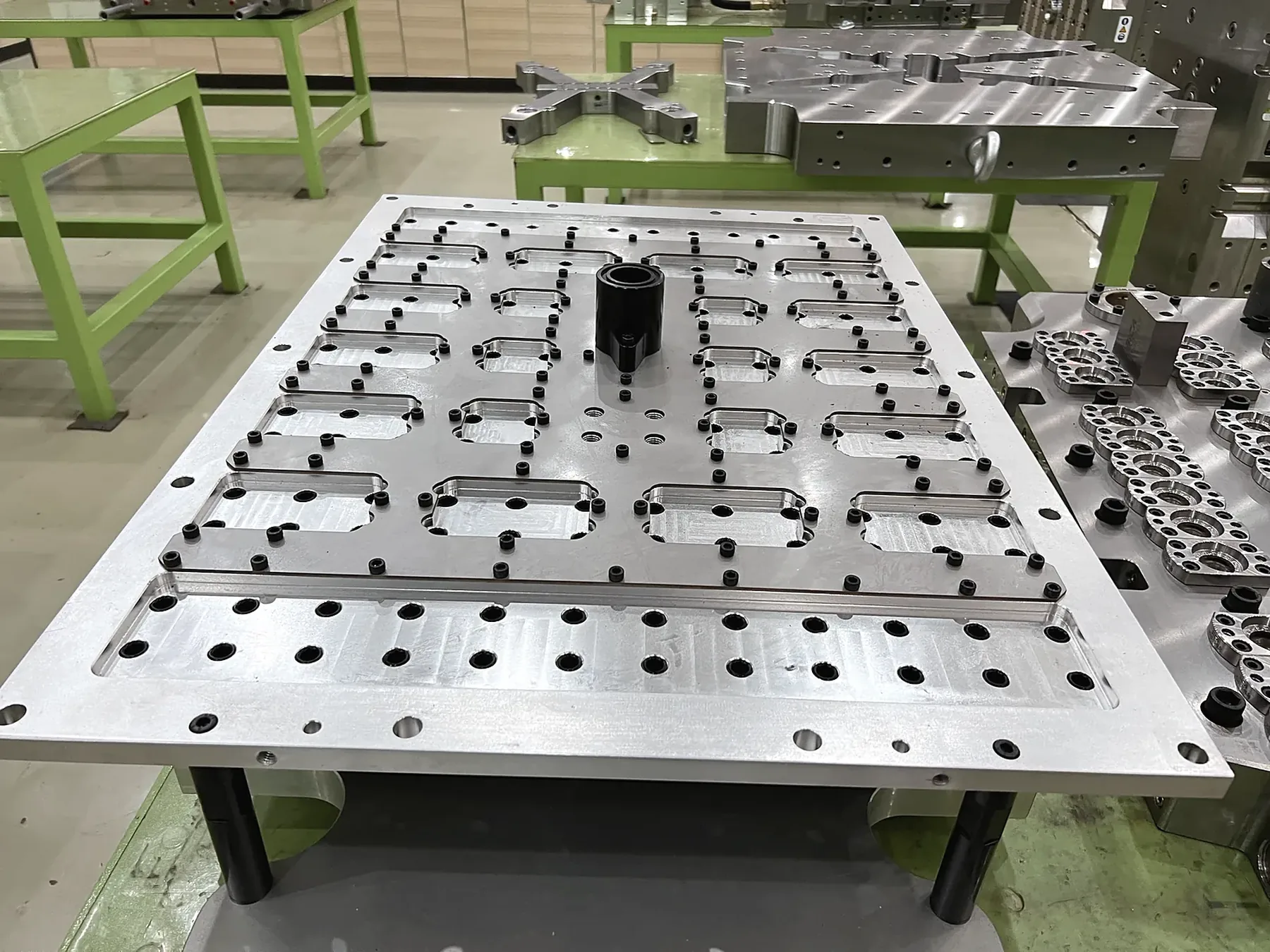
The steel decides how long the mold lasts, how well it holds a polished finish and how it resists the resin. Pre-hardened P20 and 718H are common for mold bases and for large parts such as crates; stainless steels such as S136 resist corrosion and keep a high polish, which suits preforms and food packaging; through-hardened steels last the longest at high cycle counts.
Mold life is stated as a design life in shots or cycles and depends on the resin, cycle time and maintenance. These are the specifications of HWAMDA molds for three product groups:
| Mold | Steel | Design life | Lead time |
|---|---|---|---|
| Plastic crate mold | P20 mold base, 718H core and cavity | 500,000 shots | 60 working days |
| PET preform mold | S136 or M333 (M333 hardened to HRC 48–51 for high output) | 5 million cycles | 60 working days |
| Thin-wall food container mold | S136 or M333 | 5 million cycles | 60 working days |
Cavities, cycle time and output
Output per hour = cavities × 3,600 ÷ cycle time in seconds. Two examples recorded in HWAMDA mold trials:
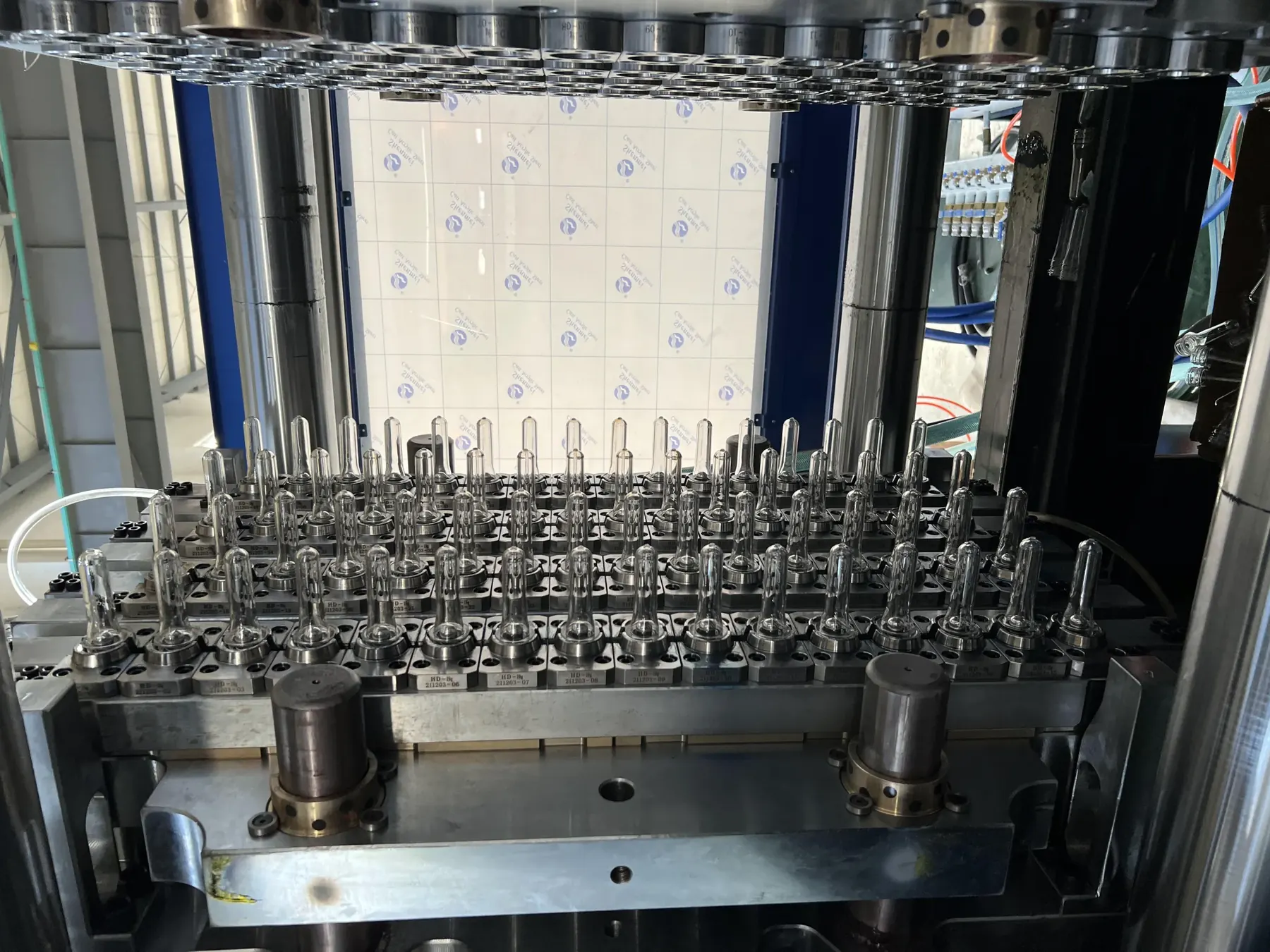
A 72-cavity PET preform mold for 16.5 g preforms at a 9.9 s cycle gives about 26,000 preforms per hour. An 8-cavity mold for 650 ml rectangular food containers at 3.3 s, on an HMD458M8-SP6, gives about 8,700 containers per hour.
More cavities raise output but need a larger machine: cavities × part weight must fit the shot size, and the projected area of all cavities sets the clamping force.
Matching the mold to the injection molding machine
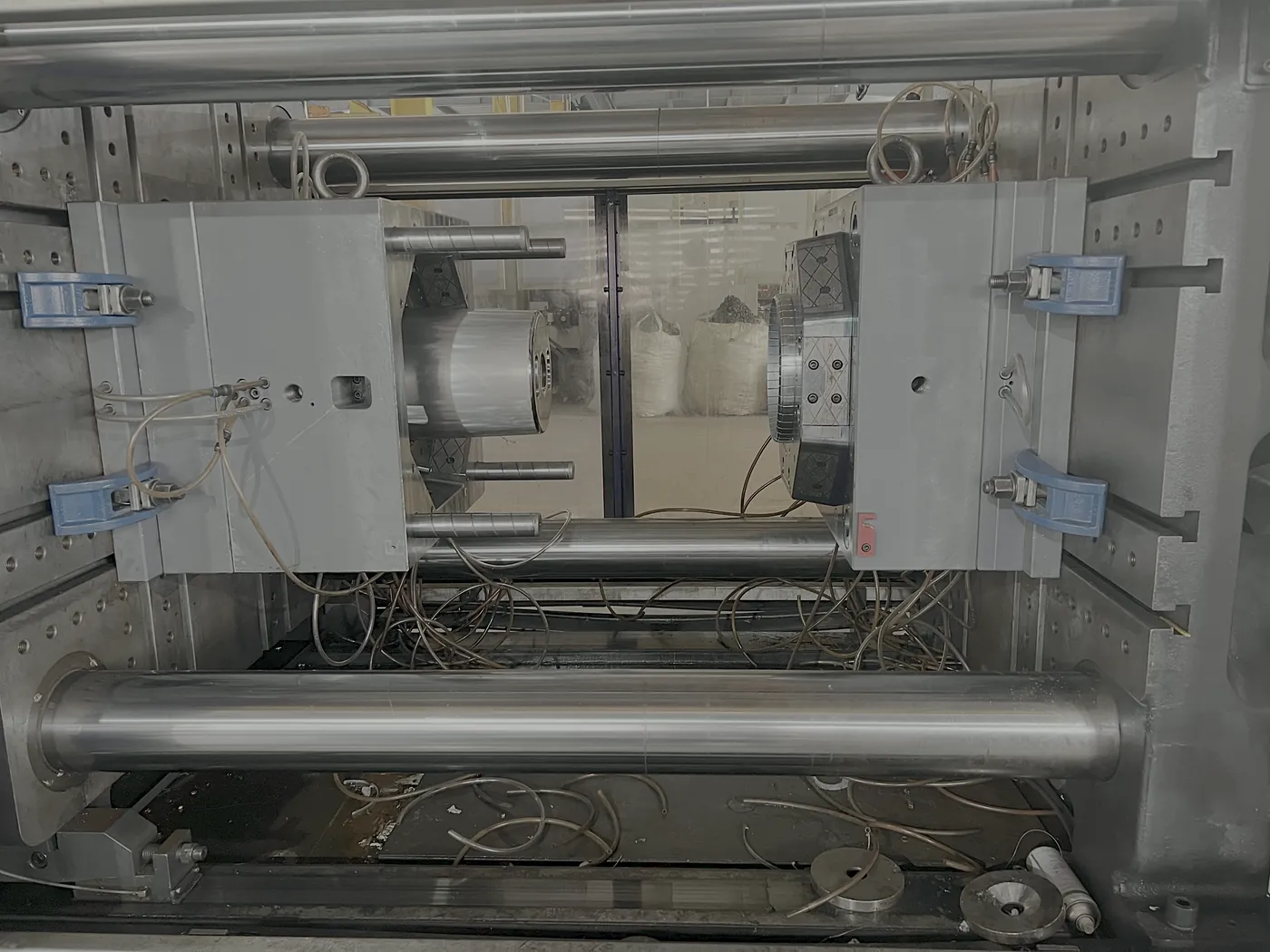
A mold only produces if the machine can hold it, fill it and open it. Check these values on the machine specification before ordering either one:
- Clamping force
- Projected area of all cavities and runners × cavity pressure. Too little force and the mold flashes.
- Shot size
- Total shot weight (all cavities plus any runner) should sit within the usable range of the injection unit.
- Tie-bar spacing and platen size
- The mold must fit between the tie bars and be supported by the platen.
- Mold height and opening stroke
- The mold thickness must sit between the machine’s minimum and maximum mold height, and the opening stroke must be long enough to remove the part.
- Ejection, cooling and controls
- Ejector stroke and pattern, water connections, hot-runner zones, valve-gate and core-pull controls must match the mold.
HWAMDA molds by product
HWAMDA supplies molds matched to its injection molding machines. Each product page lists the mold options, recorded examples and what to send for a quotation.
What to send for a mold quotation
A mold quotation is only as precise as the information behind it. Send what you have; missing details can be worked out together.
- Part
- A 3D drawing, a sample or clear photos with the main dimensions.
- Material and weight
- The resin grade and the target part weight.
- Output
- Parts per hour or per year, which sets the cavity count.
- Machine
- The machine the mold will run on, or a request to match a new one.
- Decoration and acceptance
- IML, color, surface finish, and how samples will be approved at the trial.
FAQ
Frequently asked questions
What is the difference between the mold and the injection molding machine?
The machine melts, injects and clamps; it can run many different molds. The mold is the tool that shapes one specific product and is mounted in the machine. A new product usually needs a new mold, not a new machine.
How much does a plastic injection mold cost?
It depends on part size, cavity count, steel, hot runner, side actions, IML and the required life. For a quotation, send the part drawing or sample, material, output target and machine.
How long does an injection mold last?
It depends on the steel, resin, cycle time and maintenance. As examples, HWAMDA crate molds are designed for 500,000 shots, and PET preform and thin-wall food container molds for 5 million cycles.
What is a hot-runner mold?
A mold with a heated manifold and nozzles that keep the plastic molten up to each gate. It eliminates runner waste, shortens the cycle and balances filling between cavities.
How many cavities should my mold have?
Start from cavities ≈ required parts per hour × cycle time in seconds ÷ 3,600, then confirm that the machine has the shot size, clamping force and mold space for that cavity count.
How long does it take to make a mold?
HWAMDA PET preform, crate and thin-wall food container molds have a lead time of 60 working days.