 HWAMDA
PART & RUNNER HANDLING
Injection Molding Conveyors
Move molded parts and runners away from the machine after ejection or robot take-out, toward packing, stacking, cooling or the granulator.
01 / PRODUCTION TASK
The conveyor closes the molding cell
Once a part leaves the mold, it still has to reach packing, stacking or the next operation without damage or manual handling at the machine. A conveyor is chosen around where the part arrives and where it has to go.
Parts placed by a take-out robot
Runners sent to the granulator
Parts that need time to cool before packing
02 / OPERATING RELATIONSHIP
How the equipment fits the process
The flow below shows the functional relationship used for project review. Final piping, controls and connections follow the confirmed equipment.
- 01Mold opens
- 02Part drop or robot take-out
- 03Conveyor
- 04Cooling / inspection
- 05Packing, stacking or granulator
03 / EQUIPMENT CHOICE
Flat belt or inclined conveyor?
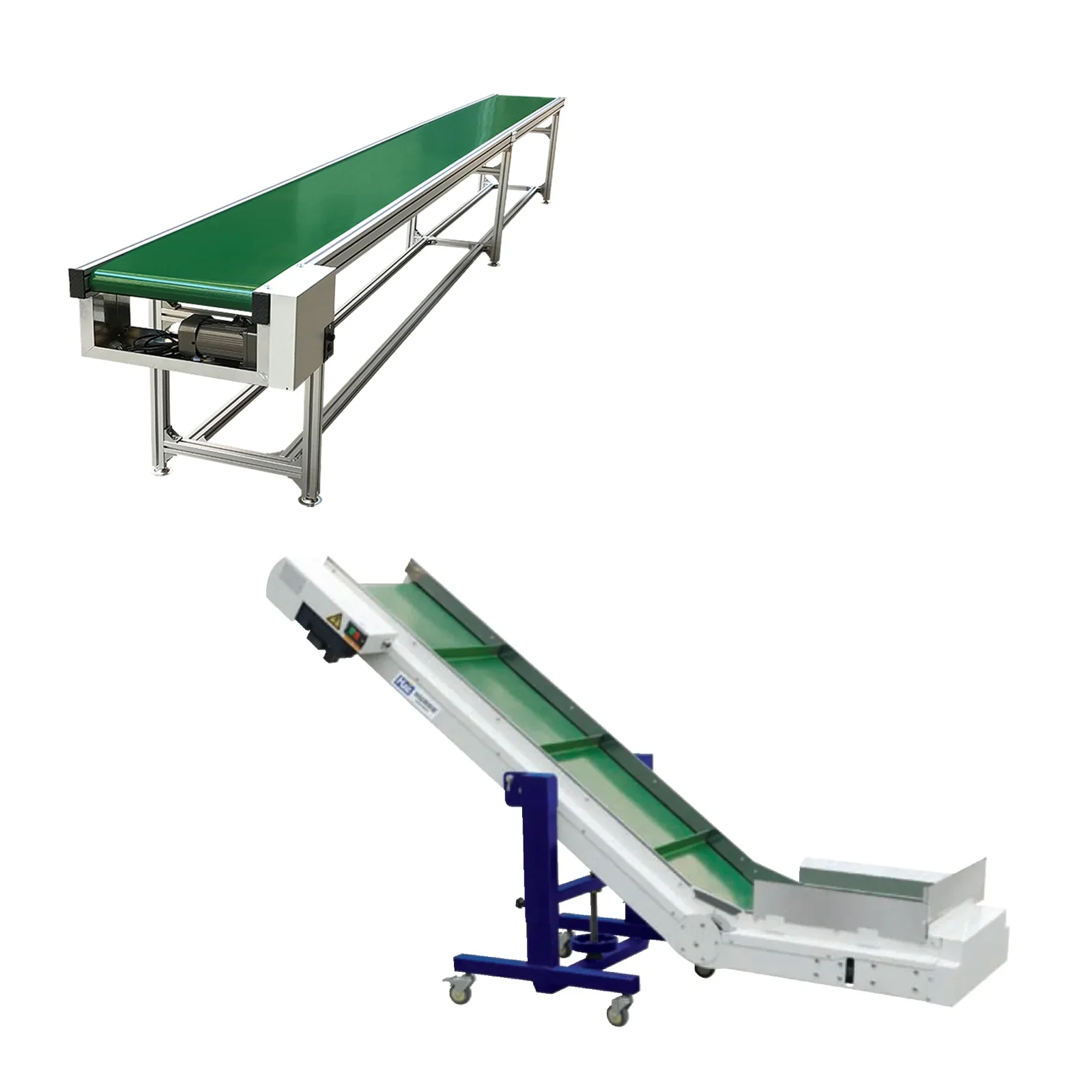
Most injection molding cells use one of two layouts, or both together.
Flat belt conveyor
Runs level beside or behind the machine and carries parts to a packing table, an inspection point or the next process.
Inclined cleated conveyor
Sits in the drop zone under the mold and lifts parts out of the machine base into a box, bin or the next conveyor.
04 / SELECTION INPUTS
What HWAMDA needs to match the equipment
With these inputs, HWAMDA can recommend equipment sized for your production rather than a generic model.
01Part size, weight and shape
02Drop height and mold area
03Robot placement position, if a robot is used
04Travel distance and discharge height
05Machine side and floor layout
06Cleats, side guards and speed control
05 / PRODUCT CONFIGURATION
Specify the conveyor with the machine
Send the part, the machine model and a sketch of the cell. HWAMDA matches the conveyor type, length and discharge height to the drop zone or robot and the packing point, and supplies it with the machine or the complete production line.
06 / PRODUCTION-CELL INTEGRATION
Connect the equipment to the complete molding cell
Review capacity and interfaces across the full sequence.
- 01Machine signal
- 02Part drop or robot take-out
- 03Conveyor
- 04Packing, stacking or granulator
07 / APPLICATION REVIEW
Configure by product and production requirement
These application families can use the equipment when their material, mold and production conditions require it.
Plastic cratesPaint bucketsThin-wall cups and containersPET preformsHousehold productsGeneral part handling
08 / BUYER QUESTIONS
Before selecting Injection Molding Conveyors
What is the difference between a flat belt and an inclined conveyor?
A flat belt conveyor moves parts level along the floor to the next station. An inclined cleated conveyor sits under the mold and lifts dropped parts up and out of the machine.
Can a conveyor be added to an existing machine?
Yes. Send the machine model, the mold area dimensions and a sketch of the space around the machine.
Is a conveyor the same as a central conveying system?
No. A conveyor moves molded parts and runners. A central conveying system moves plastic pellets from storage and dryers to the machines.
Can conveyors be supplied with a complete production line?
Yes. Conveyors can be quoted with a single machine or as part of a complete line with the mold and other auxiliary equipment.
PROJECT INQUIRY
Ask About Conveyor Integration
Send the production inputs you already know. Drawings, layout files and product photos can be attached for review.
- Machine model
- Part size and weight
- Drop or robot placement
- Travel distance and height
- Layout sketch
- Destination