 HWAMDA
Model
HMD-DP218-DM2
- Clamping force
- 2,180 kN
Models
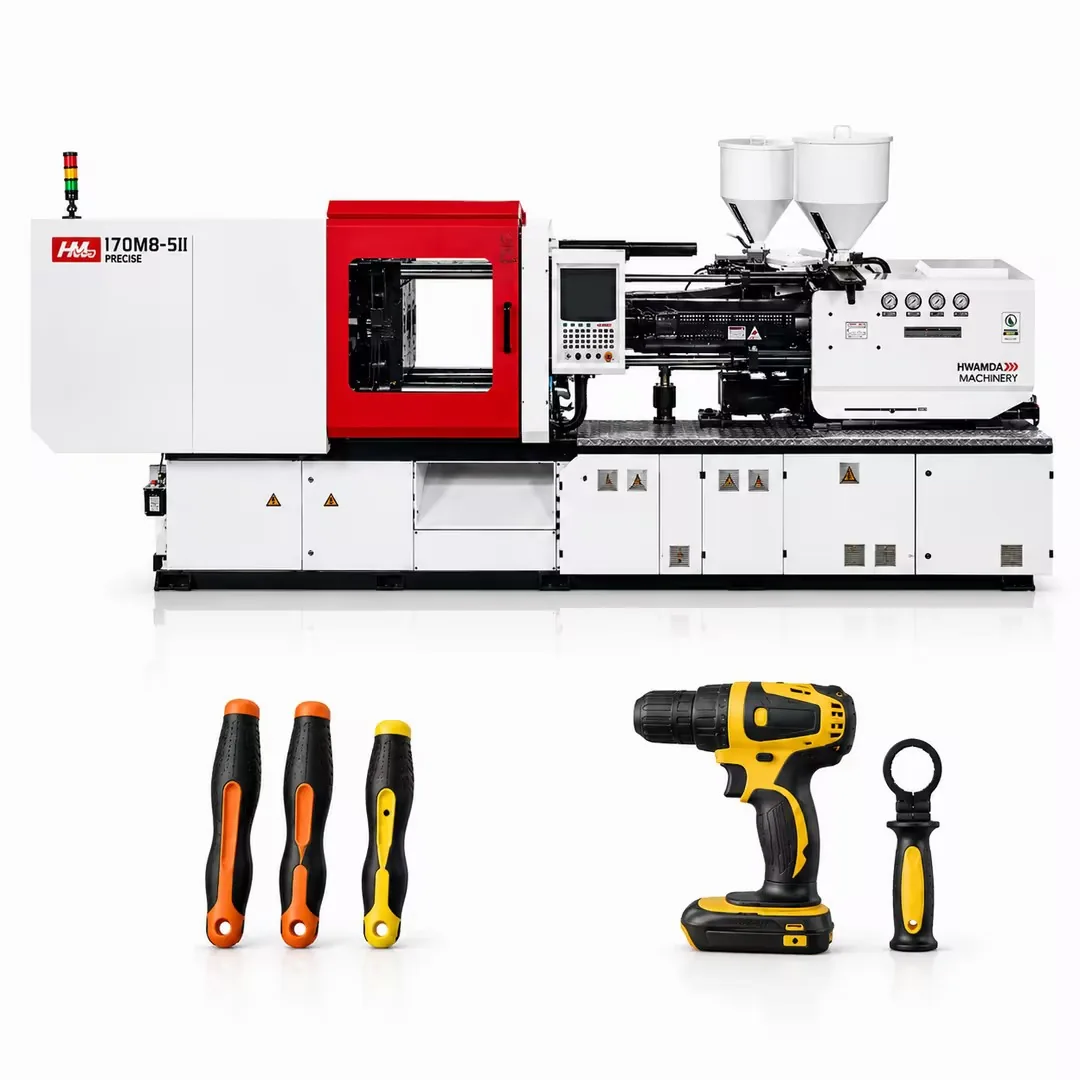
DP multi-material injection molding machines for two-color, three-color and multi-material parts, from 2,180 to 8,000 kN clamping force.
MACHINE RANGE
Review DP, DM2 and DM3 by material count, part interface, mold motion, injection sequence and automation.
Model
Model
Model
Model
Model
Model
Multi-material injection molding combines two or more materials or colors in one part during one machine cycle. It replaces assembly, painting and secondary overmolding, and it creates bonded joints and color effects that are impossible with single-shot molding. The DP series uses several injection units on one machine, and the method depends on the part and the mold.
DM2 models carry two injection units for two-color and two-material molding, including two-color mixing. DM3 models carry three injection units for three colors or materials.
| Model | Clamping force | Injection units | Notes |
|---|---|---|---|
| HMD-DP218-DM2 | 2,180 kN | 2 | Two-color mixing and mixed-layer output |
| HMD-DP218-DM3 | 2,180 kN | 3 | Three independent color feeds |
| HMD-DP268-DM2 | 2,680 kN | 2 | Two-color mixing with larger dosing capacity |
| HMD-DP268-DM3 | 2,680 kN | 3 | Three units with synchronized output |
| HMD-DP410 | 4,100 kN | 2 (A and B) | Shot weight A unit 785 g, B unit 932 g (PS) |
| HMD-DP800 | 8,000 kN | Per configuration | Large multi-shot parts |
Full specifications for each model are provided with the configuration proposal.
When materials must bond, compatibility decides the result. Typical good pairs include PP with PP-based TPE, ABS or PC with TPU or SEBS-based TPE, and same-polymer color combinations such as PP with PP or PS with PS. Shrinkage difference, processing temperatures and the order of injection are checked during the project review. Confirm bonding grades with your material supplier.
Send the part drawing or sample, the materials and colors for each zone, the shot weight of each material, the intended molding method if known, mold dimensions or concept, cavity count and target output. A sales engineer will match the DP model, injection units and mold concept to your part.
FAQ
DM2 models have two injection units for two-color or two-material molding, including color mixing. DM3 models have three injection units for three colors or materials.
The HMD-DP410 has an A unit with 785 g and a B unit with 932 g shot weight, both based on PS.
Common combinations are same-polymer colors, PP with PP-based TPE, and ABS or PC with TPU or TPE. Bonding and shrinkage are checked for each project.
Yes. Rotary, core-back or mixed-color molds are designed together with the DP machine so the units, rotation and sequence match.
Send the information you already have. We can help structure missing technical inputs.