 HWAMDA
TAKE-OUT & CELL AUTOMATION
Injection Molding Robots
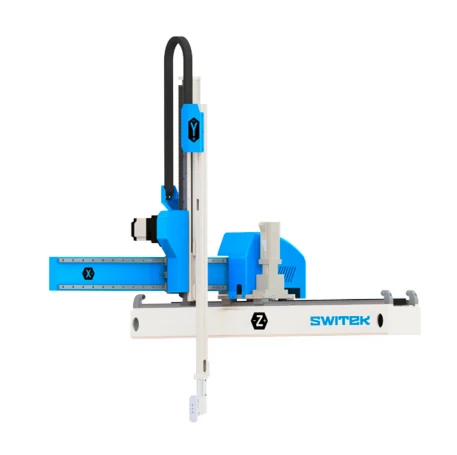
Coordinate part take-out, runner handling and downstream placement with a robot selected around the machine, mold and complete cycle sequence.
01 / PRODUCTION TASK
The robot must fit the mold-open sequence
A take-out robot is part of the molding cycle. Selection must account for access, stroke, payload, end-of-arm tooling, part release and the time available before the mold closes again.
Part and runner handling task
Payload including end-of-arm tooling
Cycle sequence and downstream placement
02 / OPERATING RELATIONSHIP
How the equipment fits the process
The flow below shows the functional relationship used for project review. Final piping, controls and connections follow the confirmed equipment.
- 01Mold opens
- 02Robot enters
- 03Part / runner pickup
- 04Robot clears mold
- 05Place, stack or convey
03 / EQUIPMENT CHOICE
Define the automation task
The required motions and interfaces differ by product and production route.
Part / runner take-out
Remove molded products, runners or both and place them in an approved downstream position.
IML coordinated automation
Review label handling, mold entry, take-out and cycle control as one dedicated IML sequence.
04 / SELECTION INPUTS
What HWAMDA needs to match the equipment
With these inputs, HWAMDA can recommend equipment sized for your production rather than a generic model.
01Injection molding machine and controller
02Mold dimensions and opening stroke
03Product / runner weight and pickup points
04Required vertical and traverse strokes
05Cycle sequence and placement
06End-of-arm tooling and safety interface
05 / PRODUCT CONFIGURATION
Select robot and EOAT as one handling package
Send the machine, mold and part information together. HWAMDA selects the robot stroke and payload around the part, runner, end-of-arm tooling and mold-opening space.
06 / PRODUCTION-CELL INTEGRATION
Connect the equipment to the complete molding cell
Review capacity and interfaces across the full sequence.
- 01Machine signal
- 02Mold opens
- 03Robot + EOAT take-out
- 04Conveyor / stacking / next operation
07 / APPLICATION REVIEW
Configure by product and production requirement
These application families can use the equipment when their material, mold and production conditions require it.
Thin-wall cupsFood containersIML packagingPET preformsPaint bucketsGeneral part take-out
08 / BUYER QUESTIONS
Before selecting Injection Molding Robots
What does an injection molding robot do?
It performs a confirmed take-out or handling task within the molding-cell sequence.
How do I choose robot payload?
Include the molded part, runners when handled, end-of-arm tooling and the required motion profile.
Can a robot be added to an existing machine?
It can be reviewed after checking the controller interface, mounting, access, safety system and cycle sequence.
Is an IML robot the same as a standard take-out robot?
Not necessarily. IML adds label handling and a product-specific mold-entry sequence.
PROJECT INQUIRY
Get a Robot Recommendation
Send the production inputs you already know. Drawings, layout files and product photos can be attached for review.
- Machine model
- Mold opening / dimensions
- Part and runner weight
- Required strokes
- Cycle sequence
- Destination