 HWAMDA
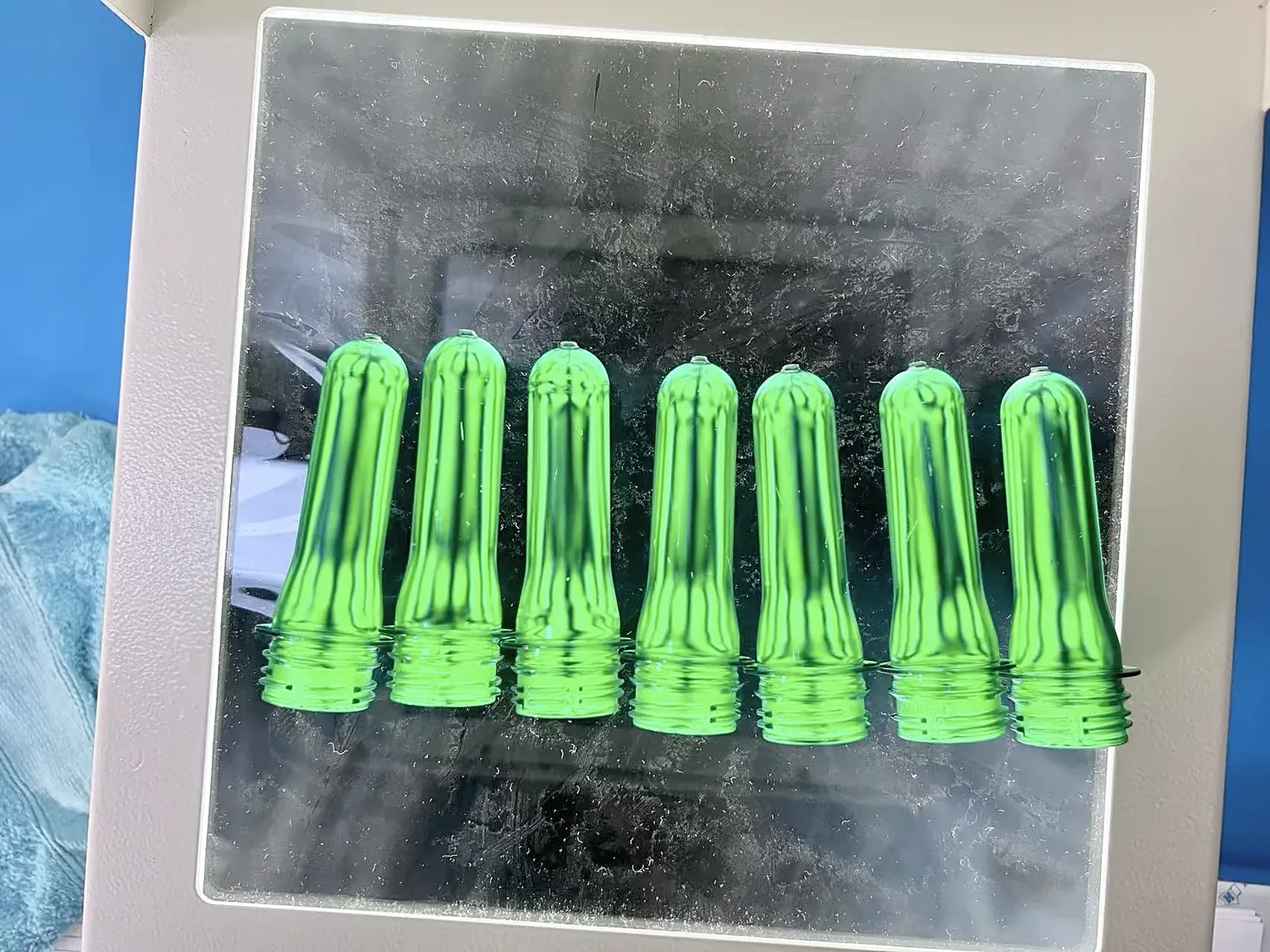
48-cavity PET preform mold
Recorded on the HMD320PET with 15.2 g bottle preforms and with 32 g preforms on a 38 mm neck. The next step when 24 or 32 cavities no longer cover the required output.

Molds
HWAMDA supplies the PET preform mold matched to the machine that will run it, and proves both together in one trial before shipment. Tell us the preform weight, neck finish and target output, and which machine will run the mold: an HMD-PET model, another brand, or not chosen yet.
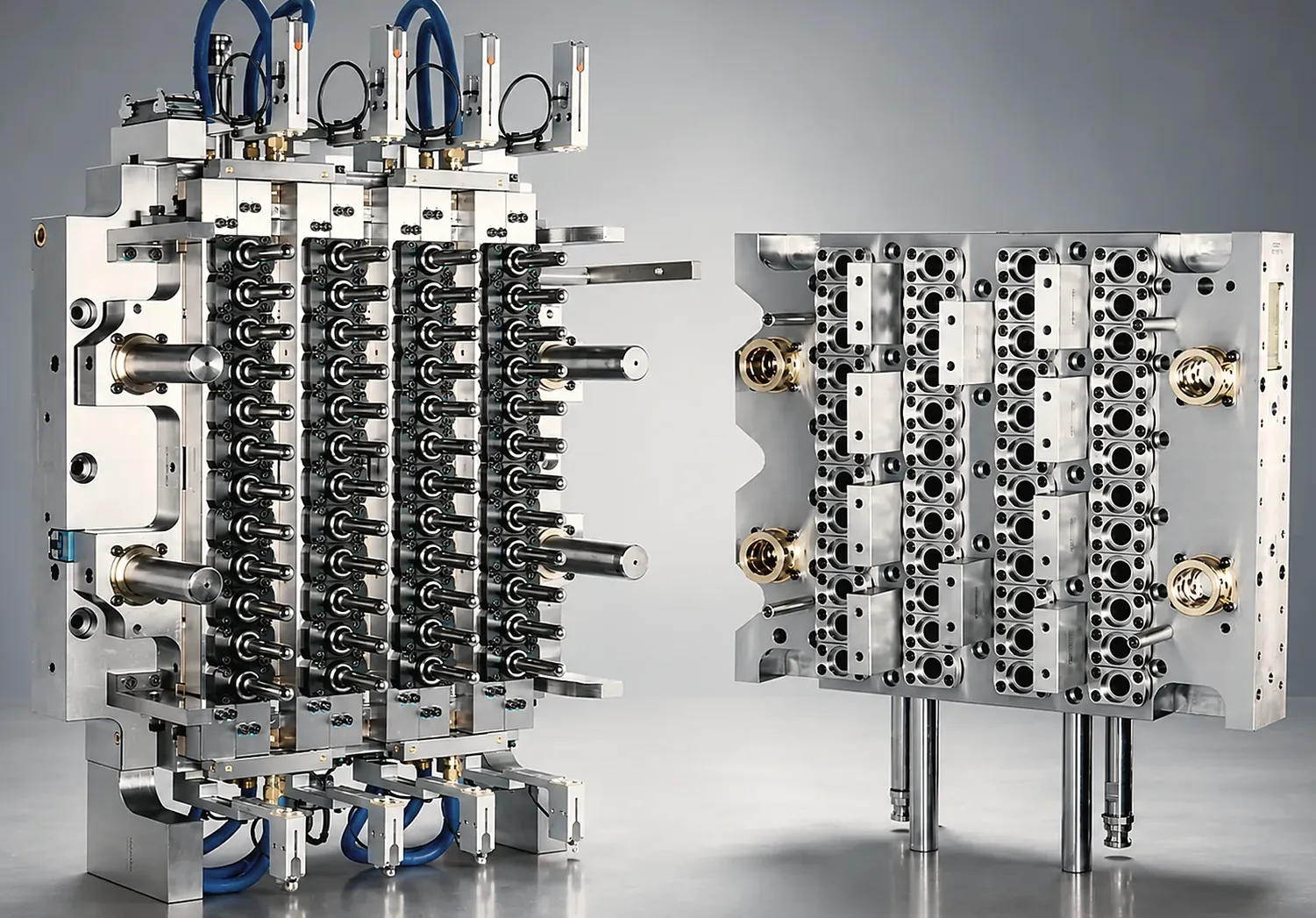
MOLD SPECIFICATION
Each PET preform mold starts from the approved preform drawing and the machine it will run on. The table shows the construction of the high-output level used for 48- and 72-cavity high-speed molds; the configuration levels below compare all three. The approved mold drawing records the final schedule for your project.
| Component | High-output level |
|---|---|
| Mold base and plates | 420 stainless steel |
| Cores, cavities and neck rings | M333 mold steel, hardened to HRC 48–51 |
| Lock rings | Material and surface treatment set on the approved mold drawing |
| Core and neck alignment | Taper fit between core and lock ring; double-taper neck rings |
| Cavity cooling | Independent spiral water circuit for each cavity |
| Hot runner | Fully balanced valve-gate hot runner with one heating zone per cavity |
| Spare parts | Standard spare kit supplied with the mold |
| Approval | Cavity layout and material schedule fixed on the approved mold drawing |
MOLD CONFIGURATION LEVELS
Choose the level that matches your cavity count and production plan. Every level uses a valve-gate hot runner.
| Level | Mold base | Core / cavity / neck | Hot runner | Suited for |
|---|---|---|---|---|
| Economy | P20 | S136 | Valve-gate hot runner | Low cavitation and budget projects |
| Standard | P20 or 420 stainless | S136 or M333 | Balanced valve gate | Continuous production |
| High-output | 420 stainless | M333, HRC 48–51 | Fully balanced valve gate, one heating zone per cavity | 48/72-cavity high-speed production |
The level is agreed in the quotation, and the materials, hot runner and spare parts are written into the technical agreement.
CAVITIES & MATCHED MACHINES
A PET bottle preform mold is sized from the preform weight and the output you need, then checked against the shot weight, tie-bar spacing and mold thickness of the machine. These pairings were recorded on HMD-PET machines in customer mold trials before shipment. Use them as starting points; the final cavity count is confirmed for your preform.
| Cavities | Preform | Matched HMD-PET model |
|---|---|---|
| 12 | 135 g edible-oil preform | HMD320PET |
| 24 | 85 g edible-oil preform | HMD320PET |
| 24 | 37 g wide-mouth preform | HMD430PET |
| 32 | 10 g bottle preform | HMD268PET |
| 48 | 15.2 g bottle preform | HMD320PET |
| 48 | 32 g preform, 38 mm neck | HMD320PET |
| 72 | 13–13.5 g bottle preforms | HMD320PET |
| 72 | 12–16.5 g water and bottle preforms | HMD430PET |
| 72 | 65 g edible-oil preform | HMD500PET |
| 96 | 13–15.2 g bottle preforms | HMD500PET |
Recorded cycle times for these setups are listed with the machine models. See the reference configurations and cycle times
Recorded on the HMD320PET with 15.2 g bottle preforms and with 32 g preforms on a 38 mm neck. The next step when 24 or 32 cavities no longer cover the required output.
Recorded on the HMD320PET (13–13.5 g) and the HMD430PET (12–16.5 g). For 65 g edible-oil preforms the same cavity count moves to the HMD500PET.
Recorded on the HMD500PET with 13–15.2 g bottle preforms, including a setup with post-mold cooling. Suited to high-volume water and beverage preforms.
NECK FINISHES
These neck finishes are part of the standard program for water and beverage preforms. Other finishes are made to your controlled neck and closure drawing.
PCO 1881
PCO 1810
29/25
30/25
Send the neck drawing or a cap sample with the preform drawing, so the neck rings are made for the closure you use.
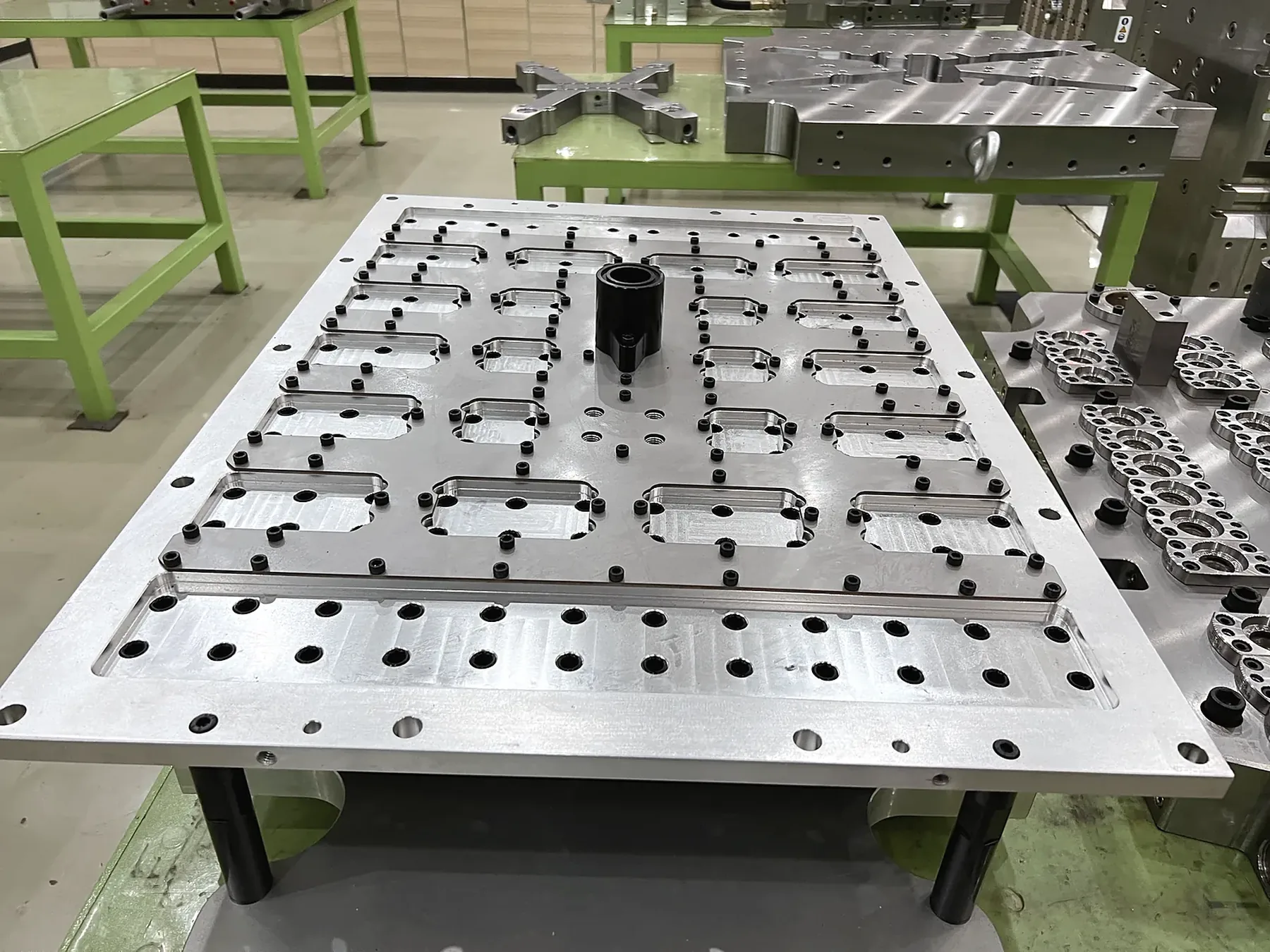
HOT RUNNER
Melt reaches every cavity through a valve-gate hot runner. A valve pin closes each gate at the end of injection for a clean gate mark and controlled filling. Manifold and nozzle temperatures are controlled by zone, and the valve timing is set on the needle-valve control of the HMD-PET machine.
Valve pin and nozzle at every cavity
Zoned manifold and nozzle temperature control
Valve timing set on the machine’s needle-valve control
Valve pins, nozzles and insulators in the spare kit
COOLING
Each cavity has its own spiral cooling circuit, so heat is removed evenly across the mold. The cycle is measured at the trial on the matched machine, with the water temperature, pressure and flow recorded next to the process settings.
Independent spiral circuit for each cavity
Water temperature, pressure and flow agreed before the trial
Mold dehumidification available for humid plants
Cycle recorded with the trial samples
MACHINE–MOLD FIT
The mold drawing is checked against the HMD-PET model before you approve it, so the mold fits, fills and opens on the machine that will run it.
Tie-bar spacing, platen size and mold thickness
Cavities × preform weight against the PET shot weight
Opening stroke, ejector stroke and preform take-out
Hot-runner controller, valve-gate air and cooling-water connections
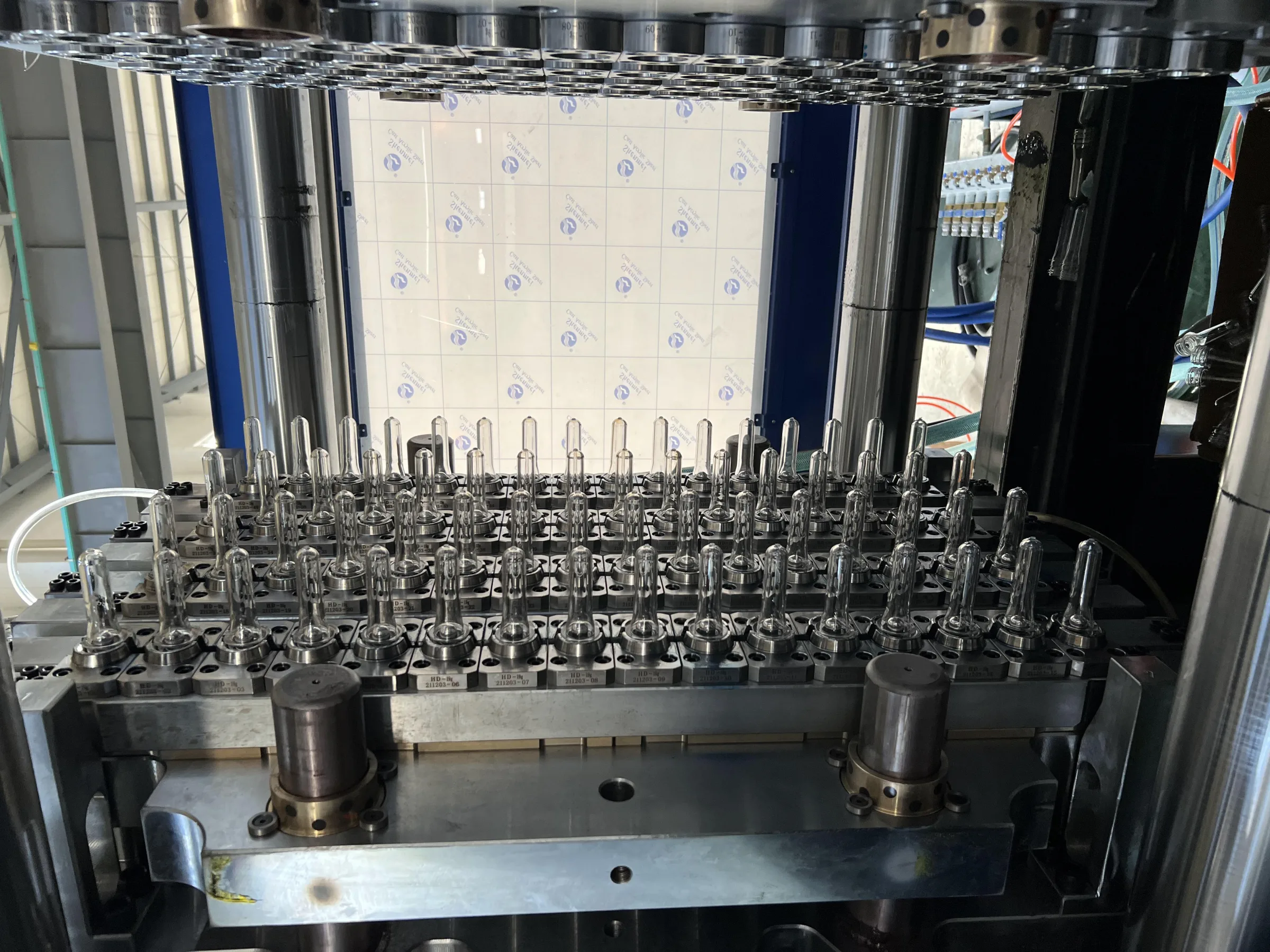
PROJECT TIMELINE
Every mold follows these stages. The quotation sets the date of each stage for your cavity count.
Preform drawing, neck finish, weight, resin, target output and machine data are checked, and the cavity count is confirmed.
You approve the mold drawing: cavity layout, stack, hot runner, cooling and machine interface. Manufacture starts from this revision.
Stack parts are machined and hardened; the mold and hot runner are assembled and checked.
The mold runs on the matched HMD-PET machine with the agreed PET resin. Every cavity must mold.
Points from T1 are corrected and checked against the agreed acceptance criteria. Bottle blowing tests are added when the project requires them.
Rust protection, spare kit, documents and export crate are checked before release.
TRIAL DELIVERABLES
Acceptance criteria are agreed before the trial, and the mold runs on the machine it is matched to. You receive:
A complete preform set with cavity numbers, one from every cavity
Inspection record: neck dimensions, preform weight, gate, appearance, flash and short shots
Process record: machine, PET resin, cooling-water condition, settings and measured cycle
Video of the mold running on the machine
Bottle blowing results, when the project requires them
Mold drawings, component list, hot-runner controller data and maintenance instructions
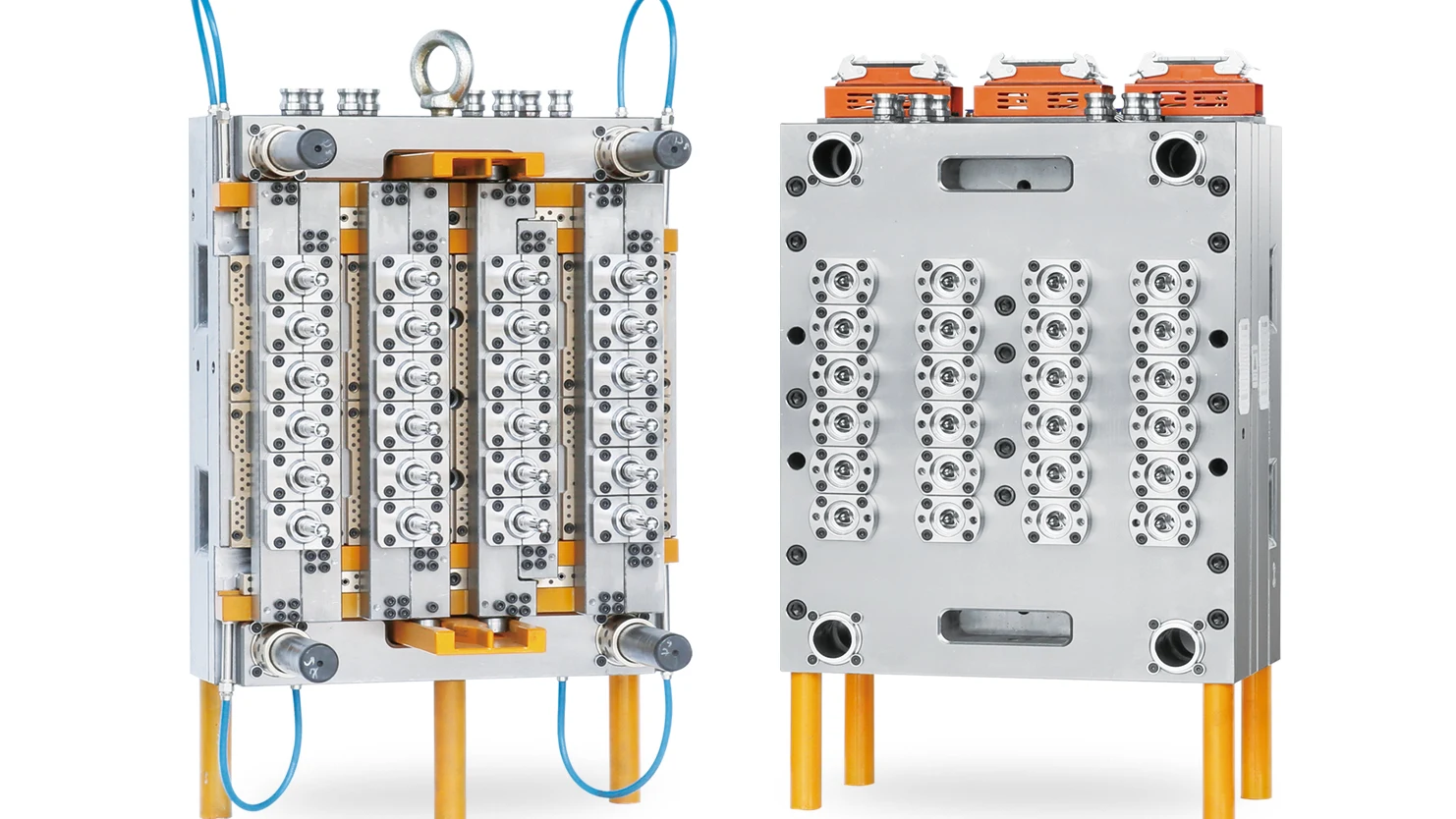
EXISTING MOLD
Your current mold can be checked against an HMD-PET machine before you order, and run on that machine in the trial before shipment. Send:
Compare HMD-PET modelsMold drawing, or outer dimensions, mold thickness and weight
Cavity count, preform weight and neck finish
Locating ring, clamping and ejector layout
Hot-runner controller zones, connectors and valve-gate air supply
Cooling-water connections
PRICE
Compare quotations on the same preform, cavity count and scope. These items move the price most.
More cavities and longer, heavier preforms need a larger mold and more stack parts.
Each neck finish needs its own neck rings and matching cores.
Number of valve gates, temperature zones and the controller.
Blowing tests, extra samples and witnessed trials.
Every mold is quoted for your project, FOB Ningbo.
REQUEST A QUOTE
Send what you have. Missing values are completed during the review.
Preform drawing, a sample or clear photos
Preform weight and neck finish, or the closure drawing
Bottle use: water, carbonated drink, edible oil or wide-mouth jar
PET resin grade and color
Target output per hour or preferred cavity count
Machine: HMD-PET model, another brand with its technical sheet, or not chosen yet
Existing mold dimensions and weight, if you have one
Destination country
RELATED
Plan the machine and the preform around the same mold.
PET preform production lines: machine, mold, drying, cooling and take-out sized to your daily output.
02Six models from 2,180 to 6,000 kN, with reference configurations by cavity count.
03Resin drying, process conditions and mold requirements.
04What a PET preform is: its parts, neck finishes and uses.
05Common defects, measurements and an inspection checklist.
FAQ
As a first estimate, cavities ≈ required preforms per hour × cycle time in seconds ÷ 3,600. Then check cavities × preform weight against the PET shot weight of each HMD-PET model. The cavity table shows pairings recorded in customer mold trials, such as 48 × 15.2 g on the HMD320PET and 96 × 15.2 g on the HMD500PET.
PCO 1881, PCO 1810, 29/25 and 30/25 are standard. Other finishes are made to your controlled neck and closure drawing.
It depends on the mold level. Economy molds use S136 cores, cavities and neck rings on a P20 base; standard molds use S136 or M333 on a P20 or 420 stainless base; high-output molds use M333 hardened to HRC 48–51 on a 420 stainless base. The level is agreed in the quotation, and the approved mold drawing records the final material schedule, including the lock rings.
Yes. Every cavity has a valve gate, and manifold and nozzle temperatures are controlled by zone. Valve pins, nozzles and insulators are part of the spare kit.
At the T1 trial on the matched machine. The cycle is recorded together with the PET resin, cooling-water condition and process settings, and delivered with the inspection record.
One preform from every cavity is weighed, and its neck dimensions, gate and appearance are inspected. The acceptance limits come from your approved preform drawing and are agreed before the trial.
Send the mold drawing or dimensions, weight, cavity count, preform weight and hot-runner data. The mold is checked against tie bars, mold thickness, shot weight, ejection and controls, and can run on the machine in the trial before shipment.
Mold drawing approval, manufacture and hardening of the stack, mold and hot-runner assembly, then the T1 trial on the matched machine. The quotation sets the date of each stage for your cavity count.
A cavity-numbered sample set, an inspection record, a process record with the measured cycle, a trial video and, when required, bottle blowing results. Mold drawings, the component list and maintenance instructions ship with the mold.
A standard spare kit is included: cavity inserts, cores, neck rings, gate inserts, valve pins, nozzles, insulators, temperature-control cards, a solenoid valve, water connectors and seals. Quantities scale with the cavity count.
Cavity count, preform size, neck finish, hot-runner scope and the trial and acceptance scope. Every mold is quoted for the project, FOB Ningbo.
Send the information you already have. We can help structure missing technical inputs.