 HWAMDA

Resources
Injection Molding Shot Size Calculator
Calculate the shot weight your mold needs from part weight, runner allowance, cavities and safety factor, in grams of PS equivalent.
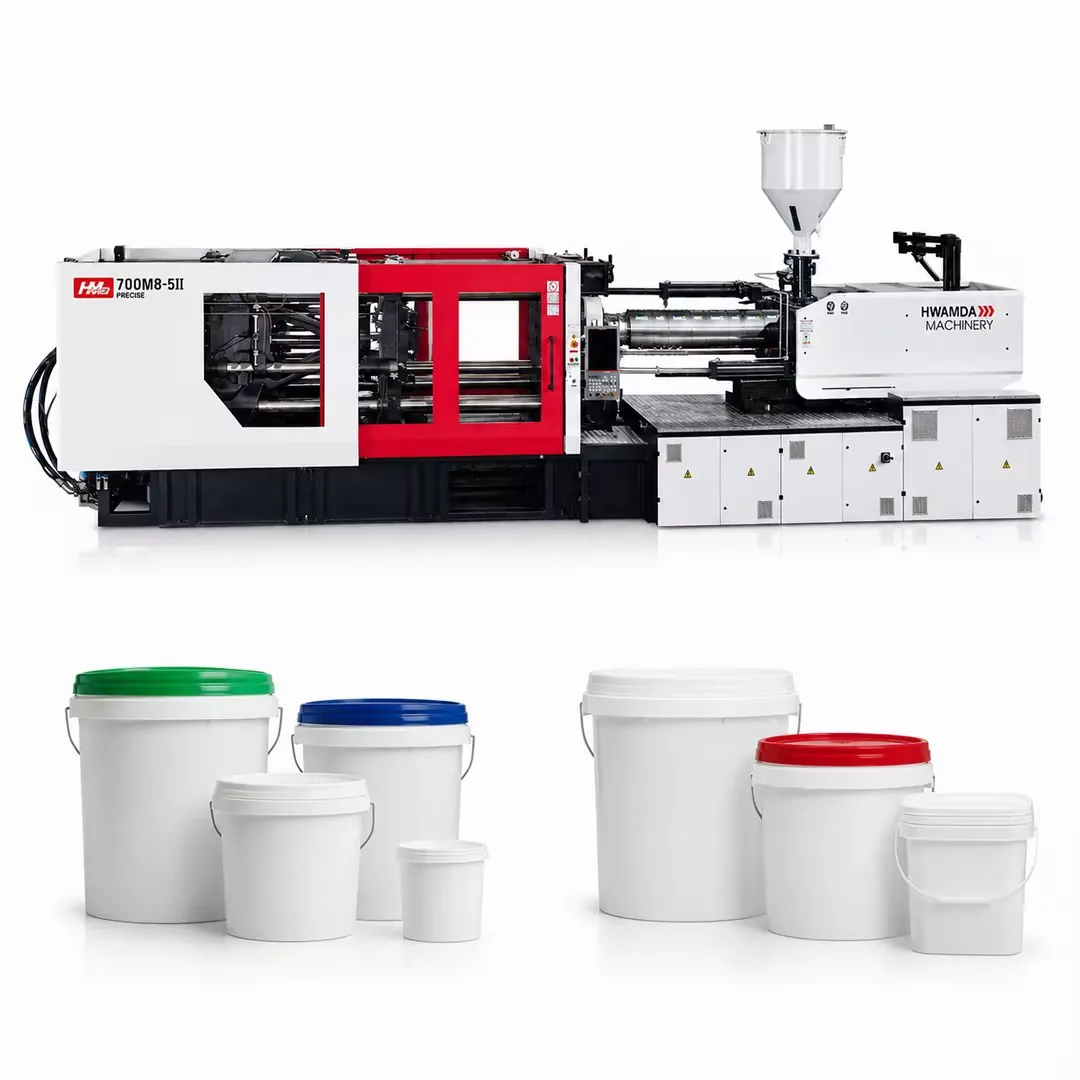
How to use the shot size calculator
Shot size tells you whether a machine's injection unit can deliver enough melt for every cycle. Enter the weight of one part in grams, the runner allowance as a percentage, the number of cavities and a safety factor. The calculator returns the required shot weight in grams of PS equivalent, the unit most machine specifications use for theoretical shot weight.
Use the result to choose an injection unit whose rated shot weight places your shot in the recommended utilization range, not just one that is barely large enough.
The formula
Required shot (g) = part weight (g) × number of cavities × (1 + runner allowance %) × safety factor.
A safety factor of about 1.1 to 1.2 is typical. It covers cushion, minor part weight changes and process adjustments.
Converting resin weight to PS equivalent
Machine shot weight is usually quoted in grams of polystyrene, which has a density of about 1.05 g/cm³ as a melt reference. A screw delivers a fixed volume, so a lighter resin weighs less per shot and a heavier one weighs more. To compare your part with the machine rating, convert: PS-equivalent weight = actual resin weight × (1.05 ÷ resin density).
Example: a PP shot of 200 g corresponds to about 200 × 1.05 ÷ 0.90 = 233 g PS equivalent. A PET shot of 200 g corresponds to about 200 × 1.05 ÷ 1.35 = 156 g PS equivalent. Enter the PS-equivalent part weight in the calculator when your material differs from PS.
| Material | Typical density (g/cm³) | Factor 1.05 ÷ density |
|---|---|---|
| PP | 0.90 to 0.91 | 1.16 |
| HDPE | 0.95 | 1.11 |
| PS (reference) | 1.05 | 1.00 |
| ABS | 1.04 to 1.06 | 1.00 |
| PA6 | 1.13 | 0.93 |
| PC | 1.20 | 0.88 |
| PET | 1.33 to 1.40 | 0.77 |
| PVC rigid | 1.35 to 1.45 | 0.75 |
Recommended shot utilization
Shot utilization is the required shot divided by the injection unit's rated shot weight. Keep it within 20 to 80 percent, ideally 30 to 70 percent. Below about 20 percent, the melt stays in the barrel for too long, which can degrade heat-sensitive materials such as PVC, PC and PET, and small screw strokes are harder to control. Above about 80 percent, there is little margin for cushion and the screw may not plasticize a uniform melt at fast cycles.
For heat-sensitive materials, aim toward the upper half of the ideal range. For thin-wall packaging with very short cycles, also check plasticizing rate in g/s, since the screw must recover a full shot within the cooling time.
Worked example
An 8-cavity cold runner mold produces PP lids weighing 12 g each. The runner allowance is 15 percent and the safety factor is 1.1. First convert part weight to PS equivalent: 12 × 1.16 = 13.9 g. Then: 13.9 × 8 × 1.15 × 1.1 = 141 g PS equivalent.
An injection unit rated at around 300 g PS gives 47 percent utilization, comfortably inside the ideal range. A 180 g unit would run at 78 percent, which is workable but leaves little margin, while a 900 g unit would sit at only 16 percent and risk long residence time.
Hot runner vs cold runner allowance
- Hot runner
- The melt in the manifold stays molten and is not ejected, so the runner allowance is typically 0 percent. Some molds use a small cold sub-runner; add its weight if present.
- Cold runner
- The sprue and runners are ejected every cycle. Typical allowance is 10 to 30 percent of total part weight, higher for small parts on large runner systems. Weigh an actual runner when one is available.
- Three-plate and valve-gate molds
- Three-plate cold runners can reach 30 to 50 percent of part weight on small parts. Valve-gated hot runners are treated like hot runners.
Next steps
Once the shot size is known, check clamping force with the tonnage calculator, then confirm that the mold fits between the tie bars and within the mold thickness range. HWAMDA M8SII servo-hydraulic machines offer several A, B, C and D injection-unit options per clamp size, so the shot can be matched to the part rather than forcing a larger clamp. For thin-wall packaging, the SP6 high-speed series combines fast injection with suitable shot sizes, and PET preform machines use a dedicated 25:1 PET screw.
Send your part weight, material, cavitation and cycle target to HWAMDA for a machine–mold matching review.
Densities are typical values; confirm with your material supplier for filled or modified grades.
FAQ
Frequently asked questions
What does 'g PS equivalent' mean?
It is the shot weight expressed as if the material were polystyrene at about 1.05 g/cm³. Machine makers rate shot capacity this way, so converting your resin weight lets you compare correctly.
How do I convert PP shot weight to PS equivalent?
Multiply the PP weight by 1.05 ÷ 0.90, or about 1.16. A 100 g PP shot is roughly 116 g PS equivalent.
What is the ideal shot utilization?
Keep the shot between 20 and 80 percent of the injection unit's rated capacity, ideally 30 to 70 percent, to balance residence time and process margin.
How much runner allowance should I use?
Typically 0 percent for hot runners and 10 to 30 percent for cold runners. Three-plate molds for small parts can be higher.
What happens if the shot is too small for the barrel?
The melt stays in the barrel for many cycles, which can degrade materials such as PVC, PC and PET and cause discoloration or black specks.
Can I change the injection unit without changing clamp size?
Yes. HWAMDA M8SII machines offer several injection-unit options per model, so you can match shot size to the part at the same clamping force.
Discuss your production requirement
Send the information you already have. We can help structure missing technical inputs.