 HWAMDA
Plastic cups
Start with cup geometry, rim, weight and wall section.
Explore the cup production solutionplastic cup moldHWAMDA SP6 SERIES
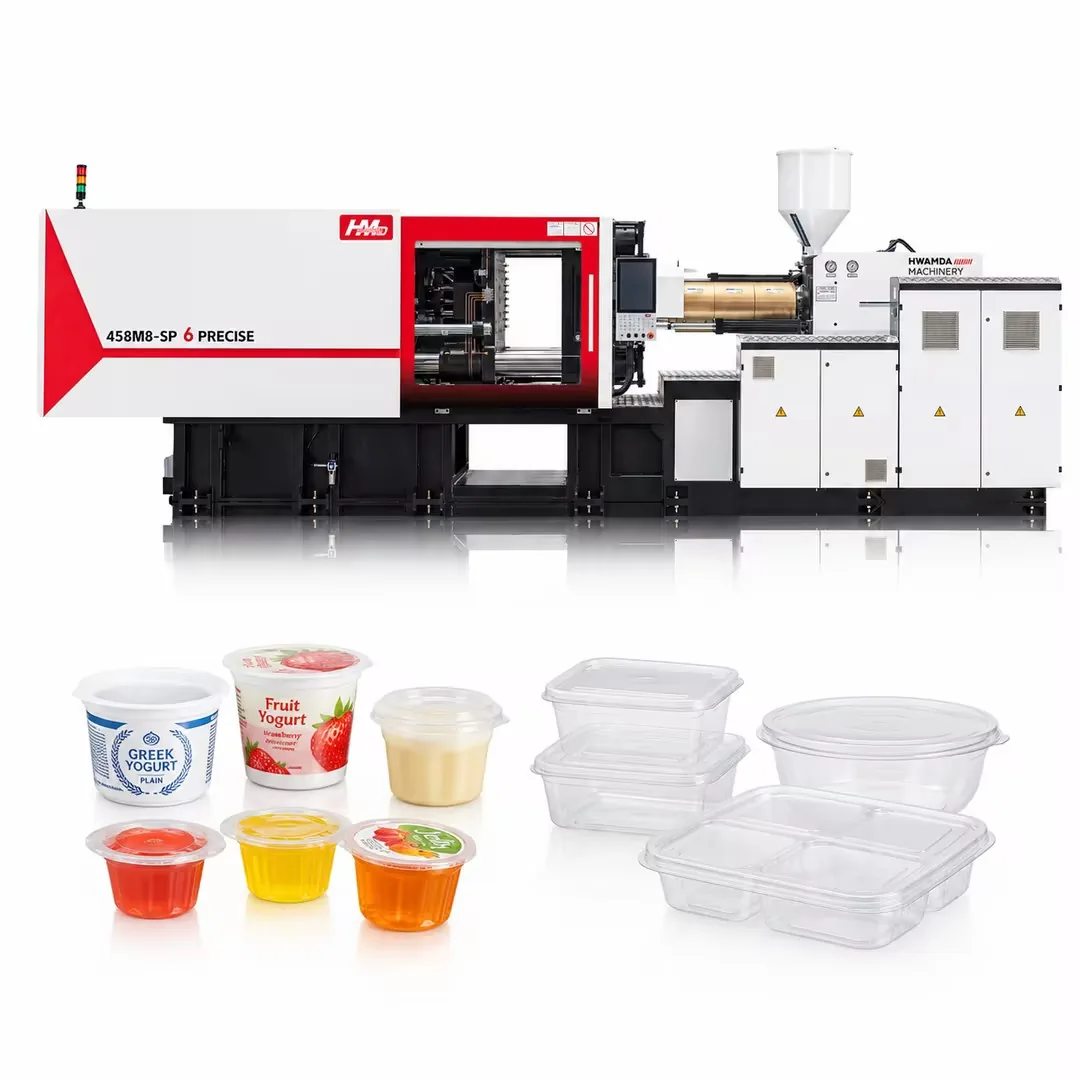
Sixth-generation M8-SP6 machines for food containers, lids and cups: ten models from 2,700 to 6,500 kN, injection speeds up to 637 mm/s and a ±0.2 mm repeat mold-opening position for fast, stable take-out.
PRODUCT FAMILIES
Cups, thin-wall boxes and tubs place different demands on filling and release. IML adds label placement to the selected product’s production sequence.
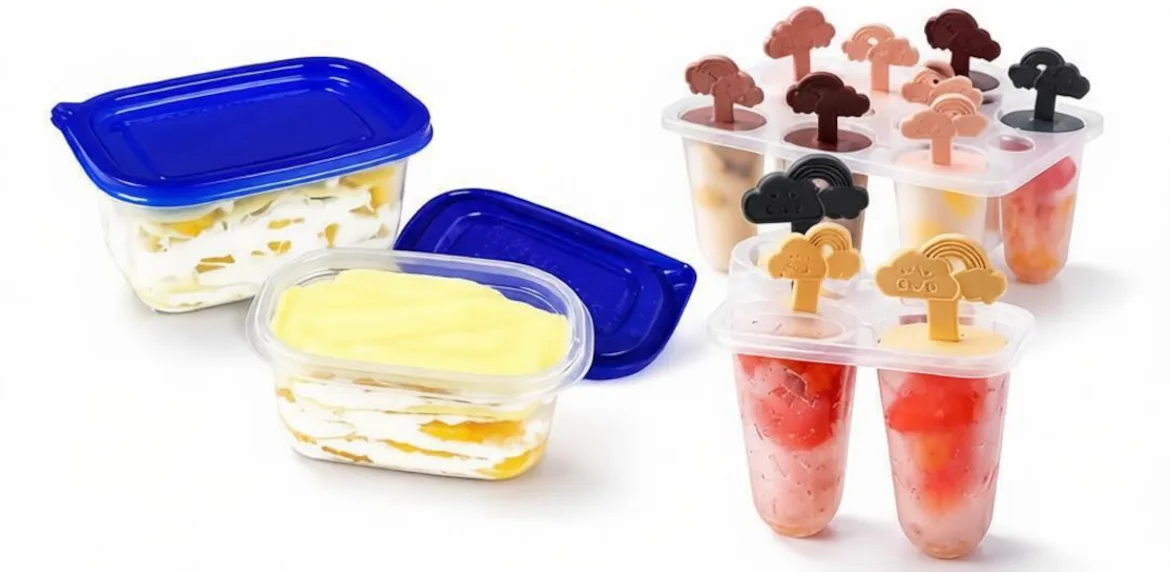
Start with cup geometry, rim, weight and wall section.
Explore the cup production solutionplastic cup moldReview boxes, round or rectangular containers and related lids.
Explore container productionthin-wall food container mouldCoordinate the machine with label placement and molded-part take-out.
Explore the IML solutionSP6 MODEL RANGE
Compare the range, then open a model for its mold space and the two injection options. HMD380, HMD420, HMD458 and HMD480 share one injection unit; choose between them by clamping force, tie-bar spacing and mold space.
Shot weight and injection speed use the PS reference; each model lists two screw options.
| Model | Clamping (kN) | Shot weight, PS (g) | Injection speed (mm/s) | Tie bars (mm) | Mold thickness (mm) |
|---|---|---|---|---|---|
| HMD270M8-SP6 | 2,700 | 482–541 | 419 | 580 × 570 | 220–600 |
| HMD308M8-SP6 | 3,080 | 482–541 | 419 | 615 × 585 | 250–650 |
| HMD350M8-SP6 | 3,500 | 584–627 | 475 | 640 × 640 | 250–650 |
| HMD380M8-SP6 | 3,800 | 432–465 | 523 | 670 × 640 | 270–670 |
| HMD400M8-SP6 | 4,000 | 835–981 | 503 | 720 × 700 | 270–670 |
| HMD420M8-SP6 | 4,200 | 432–465 | 588 | 680 × 660 | 270–675 |
| HMD458M8-SP6 | 4,580 | 432–465 | 588 | 730 × 660 | 300–700 |
| HMD480M8-SP6 | 4,800 | 432–465 | 588 | 760 × 710 | 330–750 |
| HMD550M8-SP6 | 5,500 | 845–898 | 557 | 820 × 770 | 350–800 |
| HMD650M8-SP6 | 6,500 | 845–898 | 637 | 820 × 770 | 350–900 |
Each row is one screw configuration. Injection weight and speed use the PS reference; actual resin and process requirements must be matched.
| Screw Ø (mm) | Volume (cm³) | Weight, PS (g) | Pressure (MPa) | Speed, PS (mm/s) |
|---|---|---|---|---|
| 50 | 530 | 482 | 177 | 419 |
| 53 | 595 | 541 | 158 | 419 |
Each row is one screw configuration. Injection weight and speed use the PS reference; actual resin and process requirements must be matched.
| Screw Ø (mm) | Volume (cm³) | Weight, PS (g) | Pressure (MPa) | Speed, PS (mm/s) |
|---|---|---|---|---|
| 50 | 530 | 482 | 177 | 419 |
| 53 | 595 | 541 | 158 | 419 |
Each row is one screw configuration. Injection weight and speed use the PS reference; actual resin and process requirements must be matched.
| Screw Ø (mm) | Volume (cm³) | Weight, PS (g) | Pressure (MPa) | Speed, PS (mm/s) |
|---|---|---|---|---|
| 55 | 641 | 584 | 176 | 475 |
| 57 | 689 | 627 | 163 | 475 |
Each row is one screw configuration. Injection weight and speed use the PS reference; actual resin and process requirements must be matched.
| Screw Ø (mm) | Volume (cm³) | Weight, PS (g) | Pressure (MPa) | Speed, PS (mm/s) |
|---|---|---|---|---|
| 55 | 475 | 432 | 182 | 523 |
| 57 | 510 | 465 | 169 | 523 |
Each row is one screw configuration. Injection weight and speed use the PS reference; actual resin and process requirements must be matched.
| Screw Ø (mm) | Volume (cm³) | Weight, PS (g) | Pressure (MPa) | Speed, PS (mm/s) |
|---|---|---|---|---|
| 60 | 918 | 835 | 164 | 503 |
| 65 | 1078 | 981 | 165 | 425 |
Each row is one screw configuration. Injection weight and speed use the PS reference; actual resin and process requirements must be matched.
| Screw Ø (mm) | Volume (cm³) | Weight, PS (g) | Pressure (MPa) | Speed, PS (mm/s) |
|---|---|---|---|---|
| 55 | 475 | 432 | 182 | 588 |
| 57 | 510 | 465 | 169 | 588 |
Each row is one screw configuration. Injection weight and speed use the PS reference; actual resin and process requirements must be matched.
| Screw Ø (mm) | Volume (cm³) | Weight, PS (g) | Pressure (MPa) | Speed, PS (mm/s) |
|---|---|---|---|---|
| 55 | 475 | 432 | 182 | 588 |
| 57 | 510 | 465 | 169 | 588 |
Each row is one screw configuration. Injection weight and speed use the PS reference; actual resin and process requirements must be matched.
| Screw Ø (mm) | Volume (cm³) | Weight, PS (g) | Pressure (MPa) | Speed, PS (mm/s) |
|---|---|---|---|---|
| 55 | 475 | 432 | 182 | 588 |
| 57 | 510 | 465 | 169 | 588 |
Each row is one screw configuration. Injection weight and speed use the PS reference; actual resin and process requirements must be matched.
| Screw Ø (mm) | Volume (cm³) | Weight, PS (g) | Pressure (MPa) | Speed, PS (mm/s) |
|---|---|---|---|---|
| 65 | 929 | 845 | 180 | 557 |
| 67 | 987 | 898 | 169 | 557 |
Each row is one screw configuration. Injection weight and speed use the PS reference; actual resin and process requirements must be matched.
| Screw Ø (mm) | Volume (cm³) | Weight, PS (g) | Pressure (MPa) | Speed, PS (mm/s) |
|---|---|---|---|---|
| 65 | 929 | 845 | 180 | 637 |
| 67 | 987 | 898 | 169 | 637 |
On smaller screens, swipe the option table horizontally. A larger shot option does not necessarily provide a higher injection pressure.
PRODUCTION EXAMPLES
Examples recorded on running HMD458M8-SP6 and HMD550M8-SP6 machines. Your cycle depends on the product, resin, mold and cooling, so we confirm it for your project.
| Machine | Product | Cavities | Part weight | Cycle | Output/hour (calculated) |
|---|---|---|---|---|---|
| HMD458M8-SP6 | 650 ml rectangular food container | 8 | 10.5 g | 3.3 s | 8,700 |
| HMD458M8-SP6 | 1,250 ml food container | 6 | — | 4.3 s | 5,000 |
| HMD458M8-SP6 | 1,000 ml square food container | 6 | — | 4.0 s | 5,400 |
| HMD550M8-SP6 | Square clear container | 12 | — | 5 s | 8,640 |
| HMD458M8-SP6 | Blueberry punnet | 8 | — | 10 s | 2,880 |
Hourly output = cavities × 3,600 ÷ cycle time in seconds. For the first example: 8 × 3,600 ÷ 3.3 ≈ 8,700 containers per hour before planned stops and quality checks.
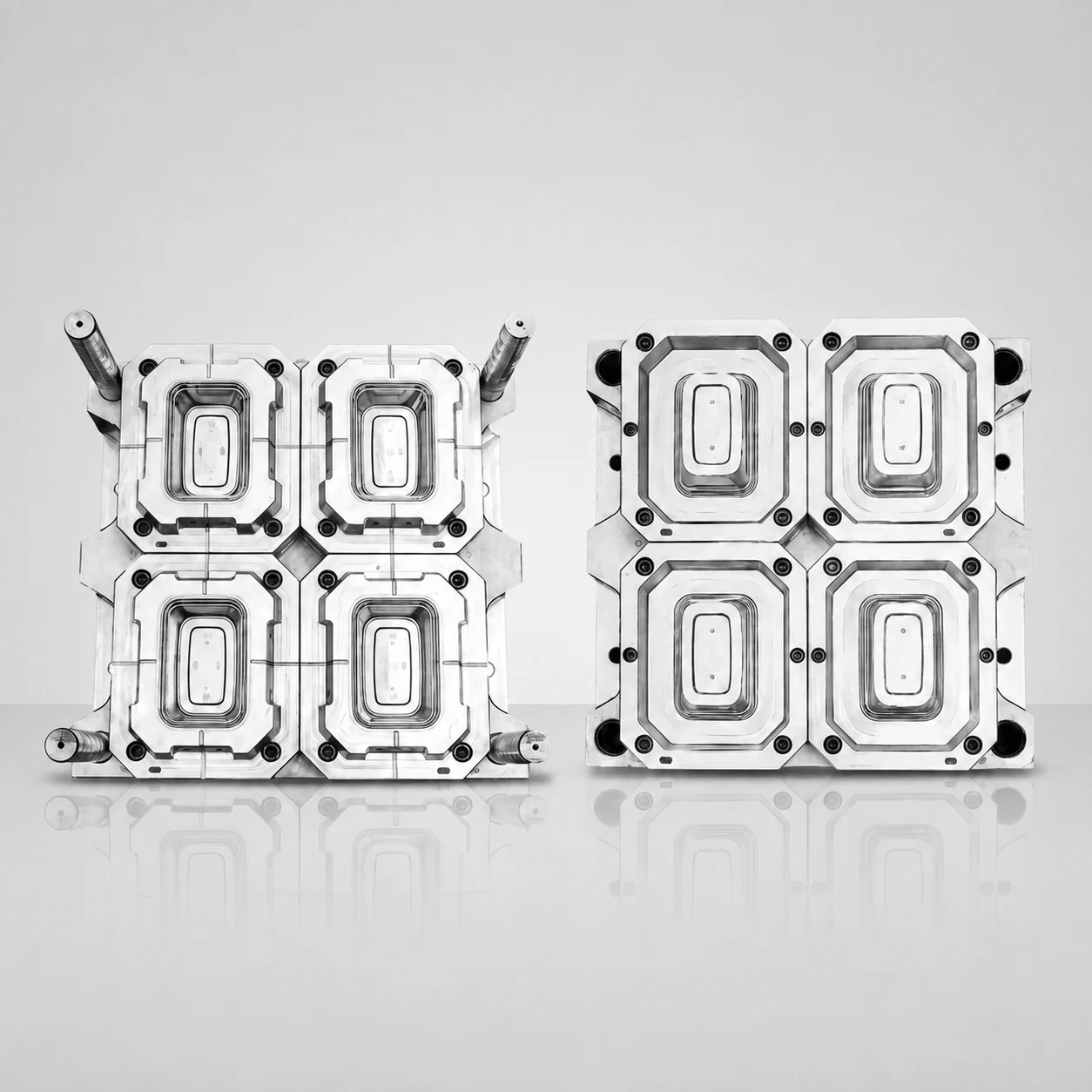
PRODUCT-LED SELECTION
Start with the product and wall thickness, then confirm shot weight, clamping force, mold space and output.
WHAT MAKES THE SP6 HIGH-SPEED
Catalogue data for the sixth-generation M8-SP6. Improvements are stated against the previous HWAMDA generation.
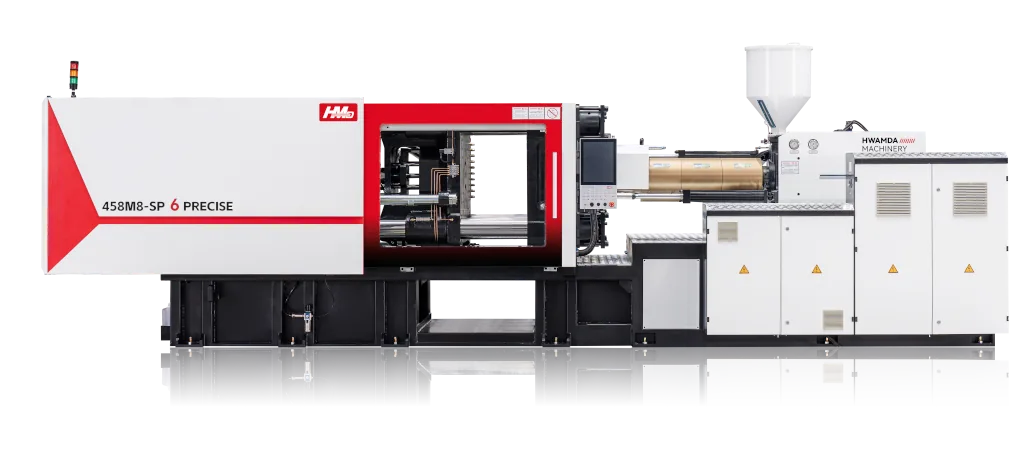
Single-cylinder injection on the main models, a twin-cylinder balanced injection seat and a low-inertia, high-response servo motor. Injection speed is up 15% and response up 20%.
Platen deformation reduced by 15% and maximum stress by 10%. Alloy-steel tie bars with special heat treatment, and graphite self-lubricating steel and copper bushes.
A closed-loop proportional valve controls opening and closing. The repeat opening position reaches ±0.2 mm, so the robot picks parts accurately at speed.
Electric plasticizing is standard on every model, with a screw designed for packaging resins. A pre-opening function shortens the time between cooling and part removal.
15-inch touch screen with storage for 1,000 mold settings
Speed fluctuation below ±5 rpm at full load; pressure stability improved by about 15%
Barrel temperature reaches a stable state 50% faster
MES interface standard on every model: OPC-UA, MQTT and MODBUS
Communication ports: RS-485, USB, CANopen and EtherCAT
MACHINE–MOLD MATCHING
Review the mold, take-out and IML interfaces together with the selected machine and product.
Confirm filling, cooling and release with the selected machine.
plastic cup moldthin-wall food container mouldCoordinate robot take-out, label placement and the machine sequence.
Explore the IML solutionReview auxiliary equipment configurationThe machine is one part of a thin-wall project. These pages cover the mold and the complete production line for each product.
Thin-wall packaging production linesQUOTATION TERMS
Confirm the commercial scope for your project; items not listed here are confirmed in the quotation.
Prices are quoted FOB Ningbo; we do not publish list prices
Machine delivery: 60 working days
Standard power supply 380 V / 3 phase / 50 Hz; other voltages on request
Robots, chillers, mold temperature controllers, dryers and loaders are optional and quoted per project
Installation and operator training are optional and quoted per project
HIGH-SPEED VS STANDARD
Not every molded product requires a high-speed machine. Compare the filling window and complete production requirement before selecting a machine family.
| Requirement | High-speed review | Standard-machine review |
|---|---|---|
| Filling & response | Demanding thin-section filling profile | Filling profile within the proposed machine’s capability |
| Mold & cooling | Balance filling and release with the short-cycle target | Match the mold and cooling to the required production rate |
| Automation | Coordinate handling or IML with the full cycle | Select handling according to the actual part and output task |
BUYER QUESTIONS
Selection depends on the filling window, machine response, plasticizing recovery and coordinated mold movements. A standard machine can be the right choice when it meets the product and production requirements.
A thin flow section can leave less time to fill the cavity before the melt cools. The machine must establish and control the required filling profile with the chosen material and mold.
Review them together with resin grade, gate location and cavity geometry. A longer flow path through a thin section can increase filling demands; wall thickness alone does not define a machine size.
More cavities change the total shot requirement, projected area, filling balance, cooling load and handling task. Review the complete mold rather than assigning a model from cavity count alone.
Check mold dimensions and mounting, projected area, filling balance, runners and gates, cooling, venting, ejection and robot access. Physical fit alone is not enough.
Material, part geometry, filling and holding, cooling, mold movement, ejection and robot or IML timing work together. Validate the complete cycle against part quality rather than using one universal cycle figure.
HWAMDA can review machine signals, mold opening, label placement and take-out timing with the IML configuration. The agreed interfaces and sequence are checked for the project.
Send the mold drawing, dimensions, weight, cavity and injection requirements, cooling connections and ejector details. The review covers both installation fit and production requirements.
Start with a product photo or drawing, material if known, dimensions, weight, wall thickness and target output. Include available mold and automation details; you do not need to know the machine tonnage.
Machine size, injection option, controls, automation and auxiliary scope affect the quotation. Prices are quoted FOB Ningbo for the configuration your product needs, so proposals can be compared on the same basis.
The four models share the same injection unit (55 or 57 mm screw, 432–465 g PS). They differ in clamping force, tie-bar spacing, platen size and mold space, so the choice follows your mold size and projected area.
Machine delivery is 60 working days. Molds, automation and auxiliary equipment are scheduled in the same project quotation when you order them together.
Calculate from projected area and cavity pressure, then confirm the machine and mold together. Use the tonnage calculator for an initial estimate and send the product and mold data for review.
The recorded example uses an HMD458M8-SP6 with an 8-cavity mold and a 3.3 s cycle. Confirm the final model against your mold dimensions, shot weight and target output.
Injection speed is 419–637 mm/s depending on the model and screw option. Shot weight and speed use the PS reference.
SEND YOUR PRODUCT
Start with your product and contact details. Add a photo or drawing if available. You do not need to choose a tonnage before asking.
Product drawing or sample
Material, if known
Product dimensions, weight and wall thickness, if known
Existing or new mold; cavities and mold dimensions
Target output, IML and automation requirements