 HWAMDA
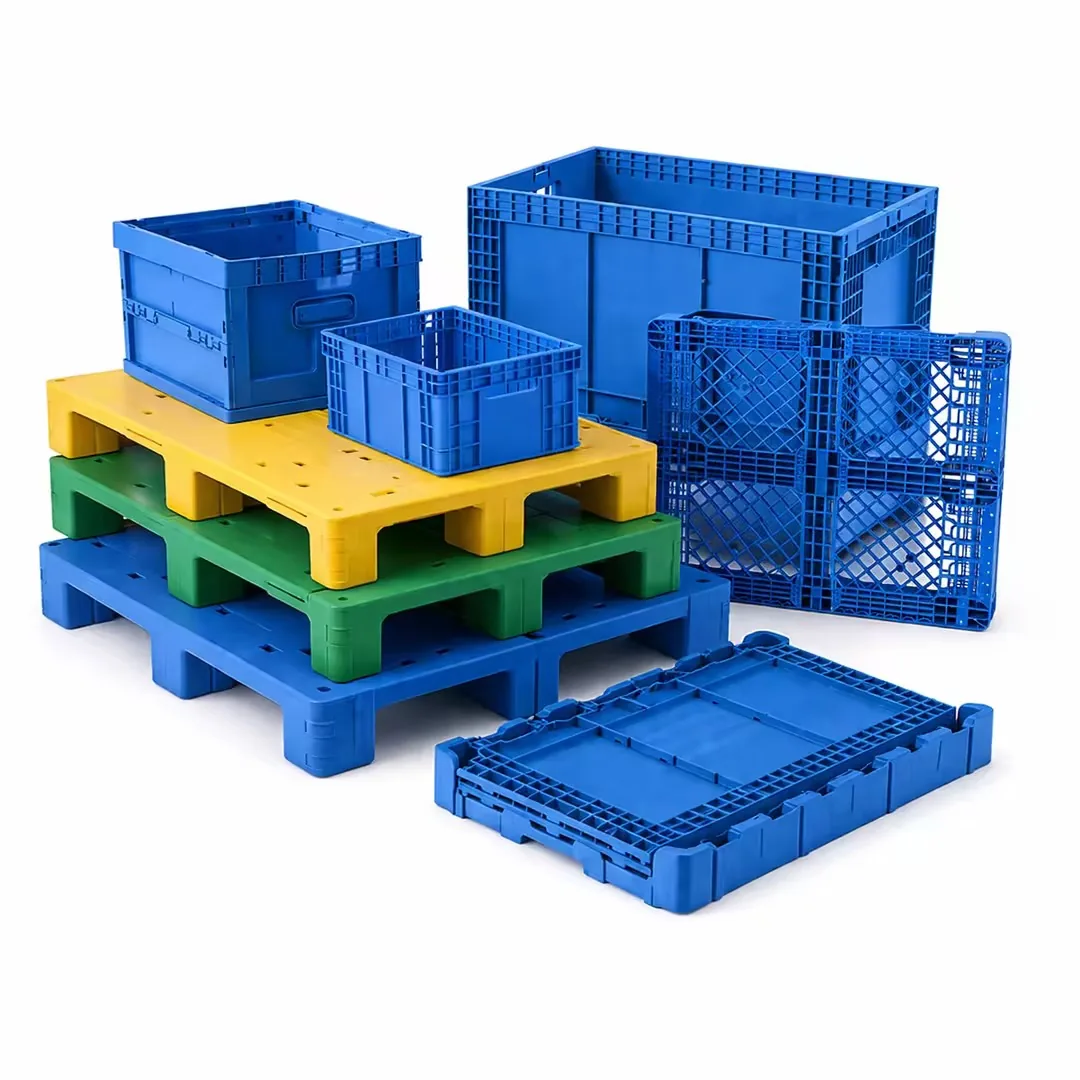
Crate and basket products
Crates are large, ribbed parts that must carry load, stack safely and survive years of handling. Producers of agricultural, beverage and logistics packaging run crate molds for long periods, so stable cycles and robust molds matter as much as the first sample.
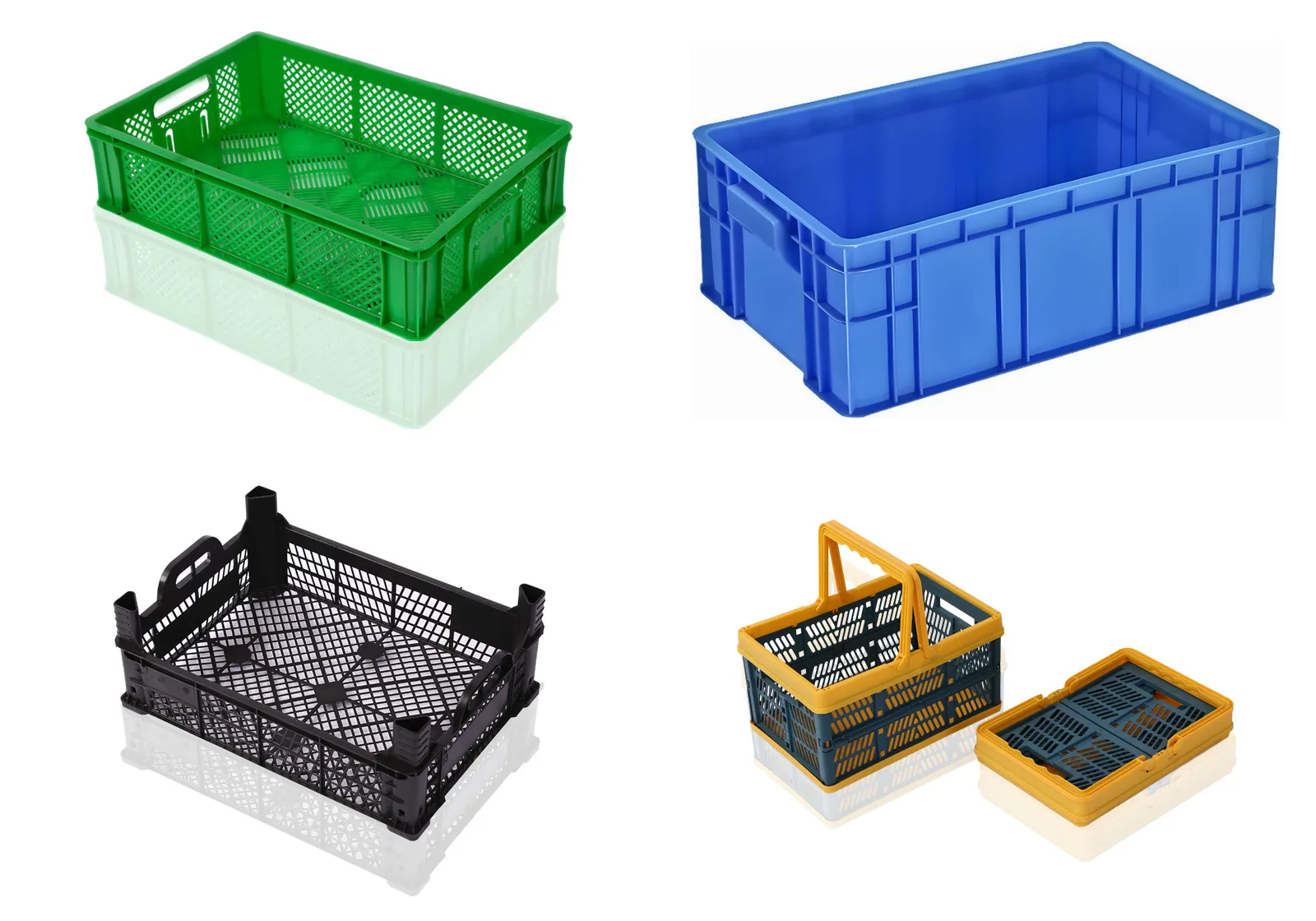
- Fruit and vegetable crates
- Ventilated, open-wall designs that keep produce cool and allow washing.
- Beverage crates
- Bottle crates with dividers and handles, built for repeated use and automated handling.
- Logistics and turnover boxes
- Solid-wall or ventilated boxes for warehouses and industrial transport, often with lids.
- Baskets and foldable crates
- Handled baskets and collapsible crates with hinges and locking features.
Materials
| Material | Typical use | Notes |
|---|---|---|
| HDPE | Beverage, fish and cold-chain crates | Good impact at low temperature; typical MFI 4–8 g/10 min for crates |
| PP copolymer | Produce crates, turnover boxes, foldable crates | Higher stiffness and easier flow |
| Recycled PP / HDPE blends | Cost-sensitive crates and baskets | Filtration and consistent melt flow need attention |
Process challenges
- Long flow paths and thin ribs
- Crate walls are often 2–4 mm with many ribs and openings. Filling requires good injection rate, hot runner balance and venting.
- Warpage and flatness
- Large flat bases and long side walls warp if cooling is uneven, which affects stacking and automated handling.
- Weld lines
- Open-wall designs create many weld lines; their strength depends on melt temperature, venting and gate position.
- Large, heavy molds
- Crate molds are wide and deep, so tie-bar spacing, platen size, opening stroke and crane capacity must be checked early.
- Cycle and output
- Typical crate cycles run approximately 35–60 s. Mold cooling, ejection and take-out decide the stable output.
Typical configurations
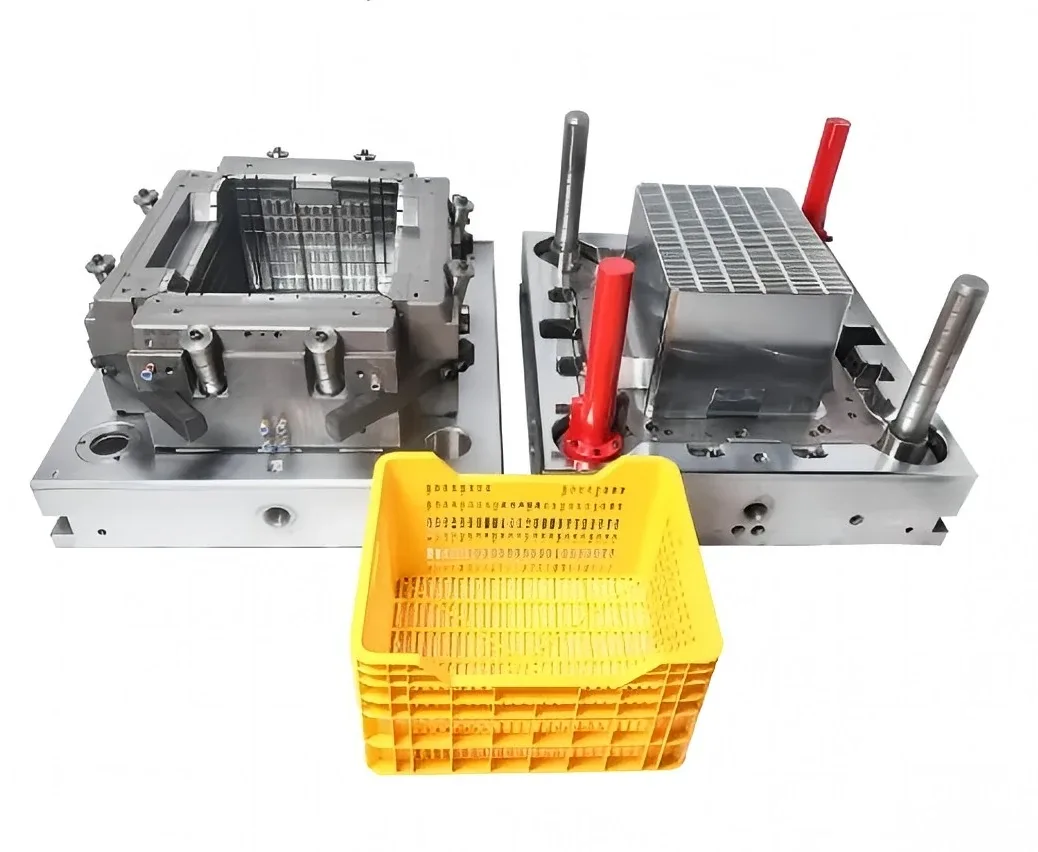
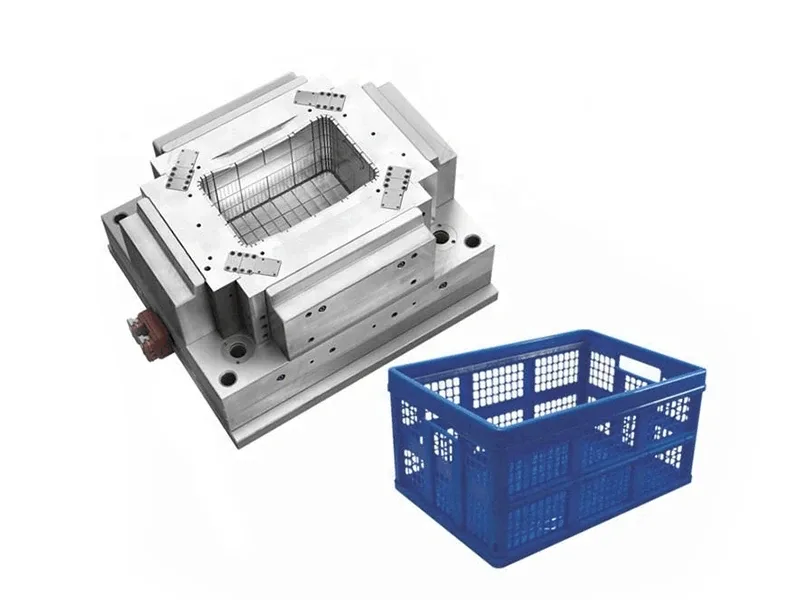
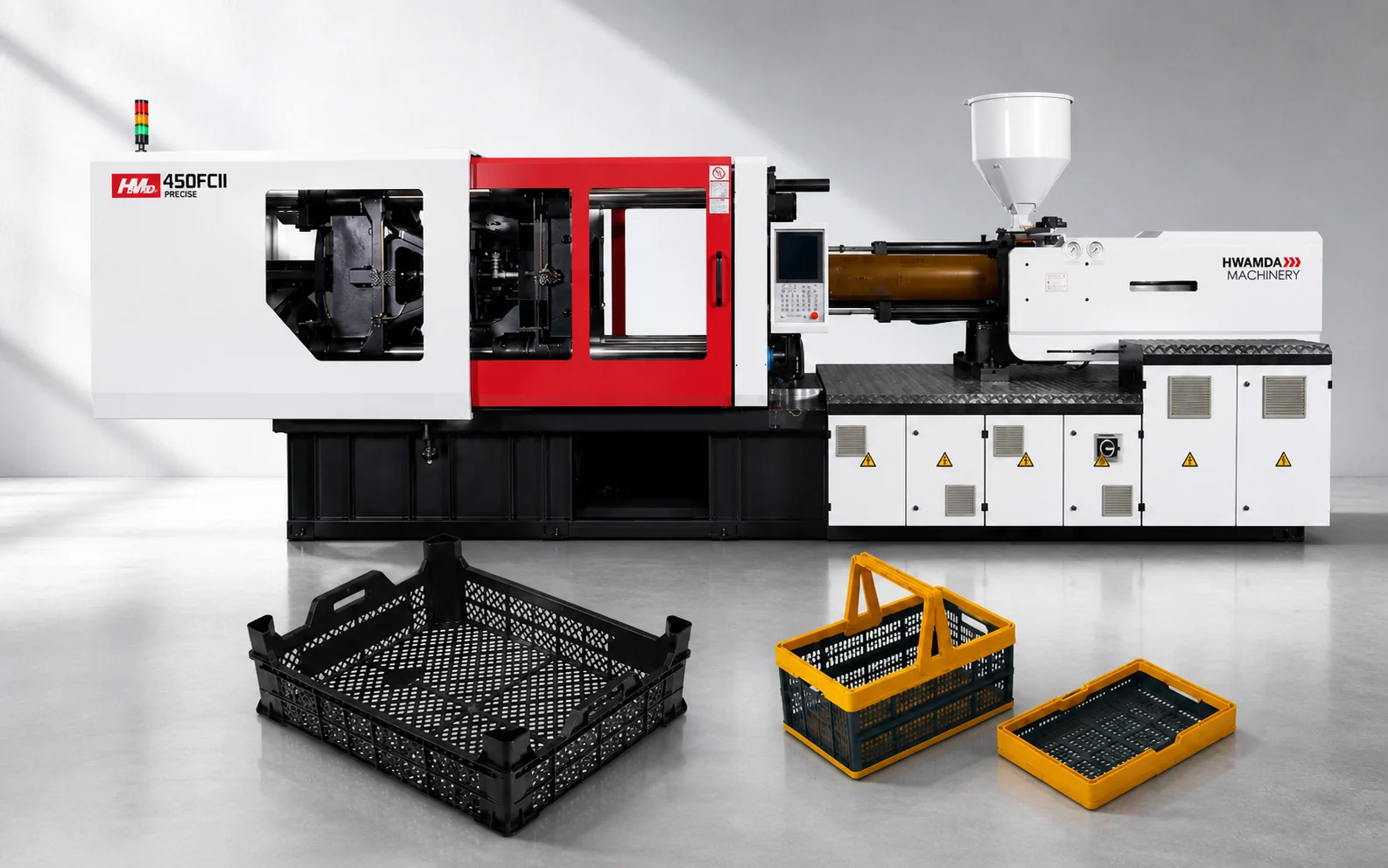
The FCII crate and basket series covers HMD320 to HMD700FCII, from 3,200 to 7,000 kN, for crates and baskets of different sizes. Larger logistics boxes and pallet-size parts can move to the DU II two-platen series. Crate molds are covered by the plastic crate mold solution, so machine and mold can be matched together.
| Product type | Typical series | Comment |
|---|---|---|
| Baskets and small crates | HMD320–HMD370FCII | Check mold size and part weight |
| Standard produce and beverage crates | HMD450–HMD580FCII | Most common crate range |
| Large crates and turnover boxes | HMD700FCII | Heavier parts and larger molds |
| Very large boxes and pallets | DU II two-platen | Large mold envelopes |
Typical quality checks for crates
- Dimensions and flatness
- Outside dimensions and base flatness for stacking, pallet patterns and automated handling.
- Weight control
- Shot-to-shot weight consistency, which confirms filling and keeps material cost under control.
- Stacking and load
- Static top load and dynamic handling tests under the load the crate will carry.
- Impact strength
- Drop or impact tests, often at low temperature for cold-chain and beverage crates.
- Visual quality
- Complete filling of ribs and openings, weld-line appearance and color consistency for branded crates.
- Mold trial before shipment
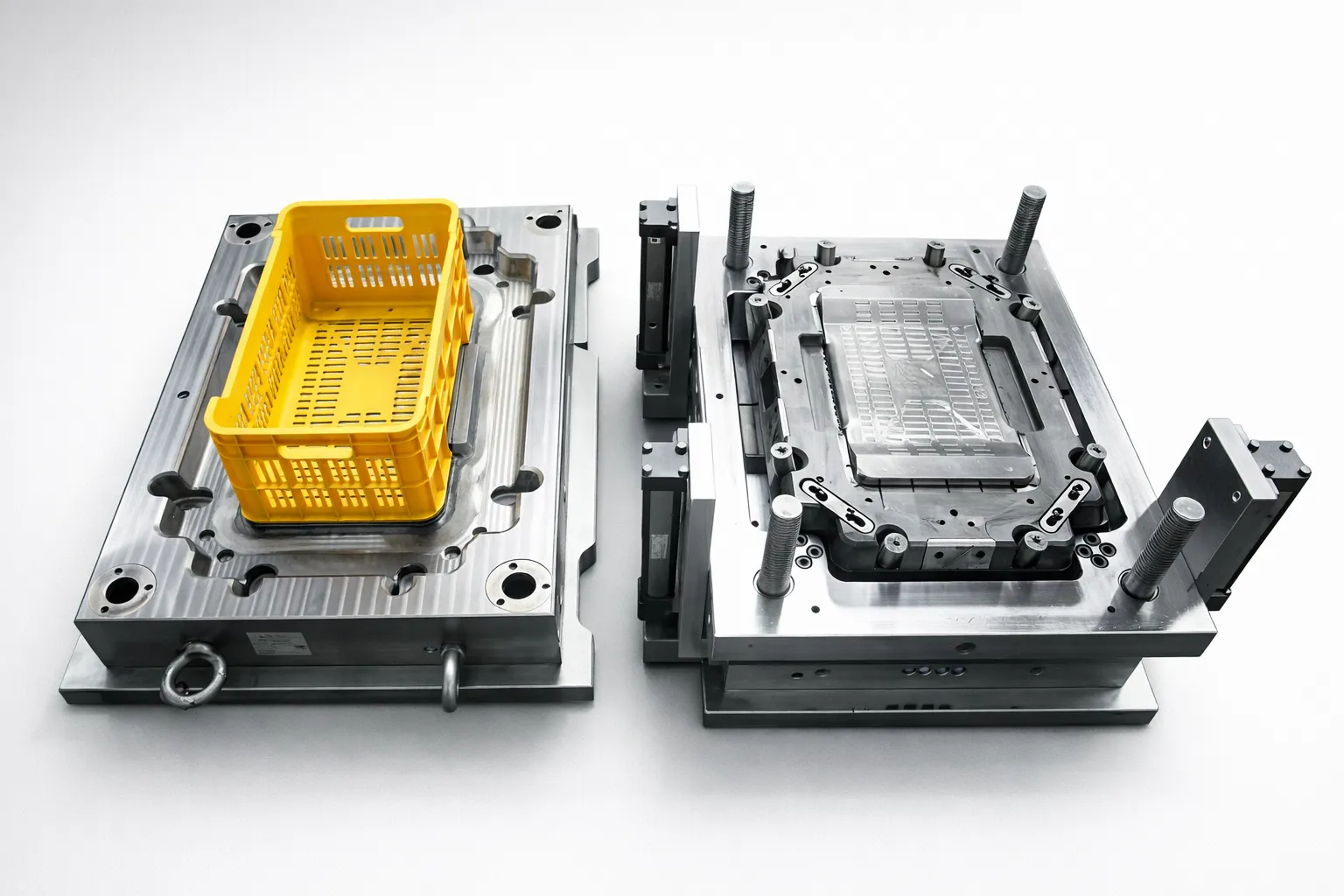
- Every crate mold is trial-run before shipment, and molded samples are sent to you for confirmation.
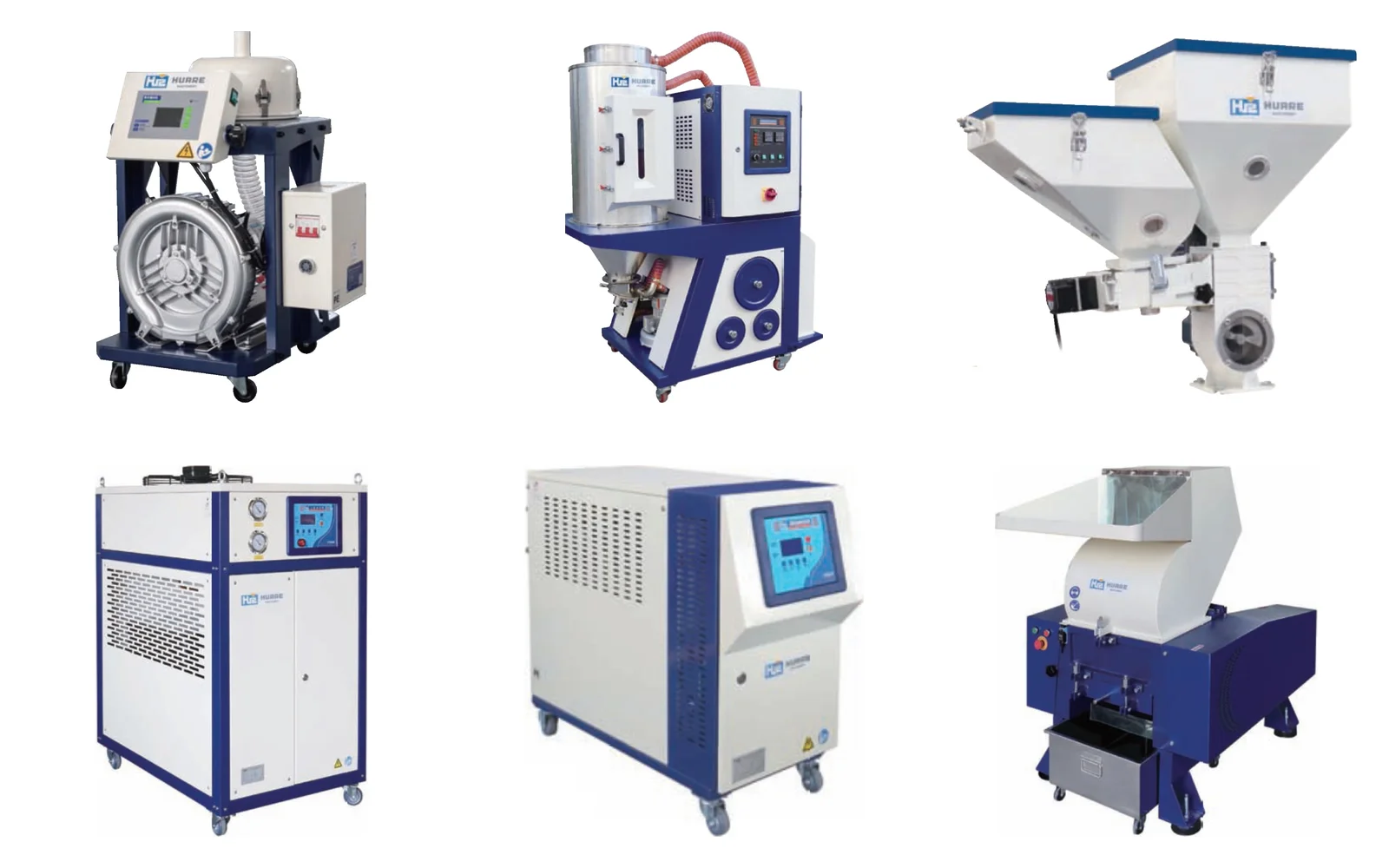
Production line equipment
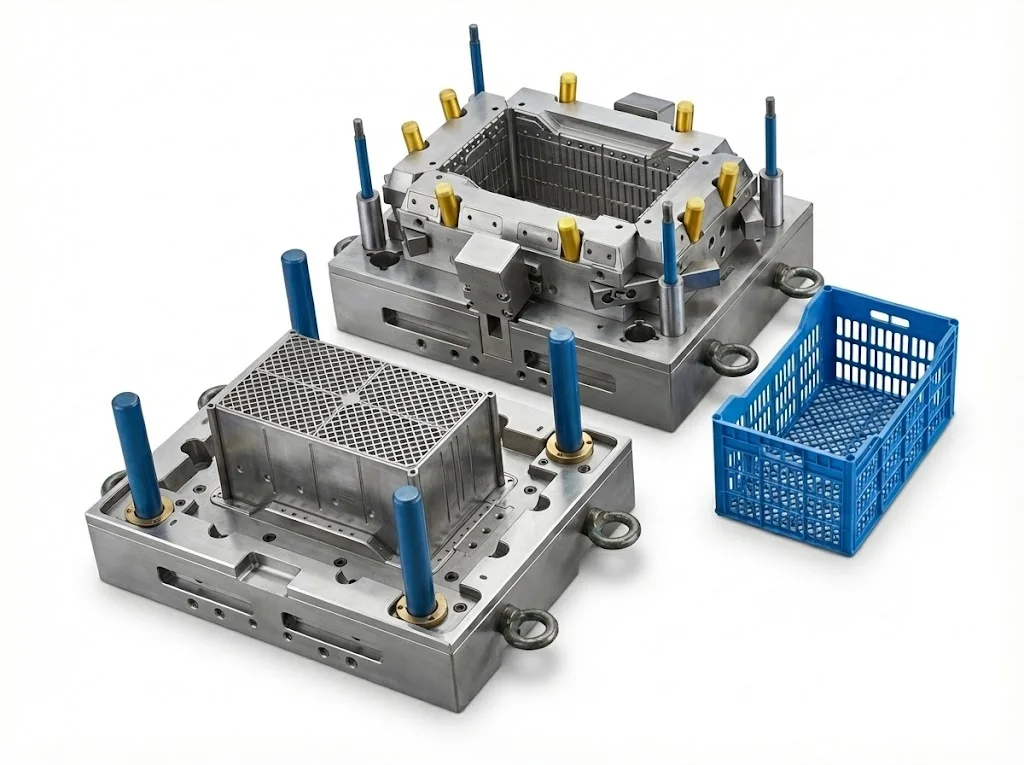
The FCII injection molding machine and the matched crate mold form the core of the line. Auxiliary equipment is optional and selected for your resin, output and handling method. Plants with several machines often move to central conveying.
| Equipment | Role in the line | Supply |
|---|---|---|
| FCII injection molding machine | Molds the crate | Core |
| Plastic crate mold | P20 mold base, 718H core and cavity, 500,000-shot design life | Core |
| Vacuum loader and dryer | Feeds and dries the resin | Optional |
| Color masterbatch doser | Doses color for branded crates | Optional |
| Chiller and mold temperature controller | Cools the mold and holds its temperature | Optional |
| Granulator | Regrinds runners and rejects for reuse | Optional |
| Robot and conveyor | Takes out, conveys and stacks the crates | Optional |
Installation and training
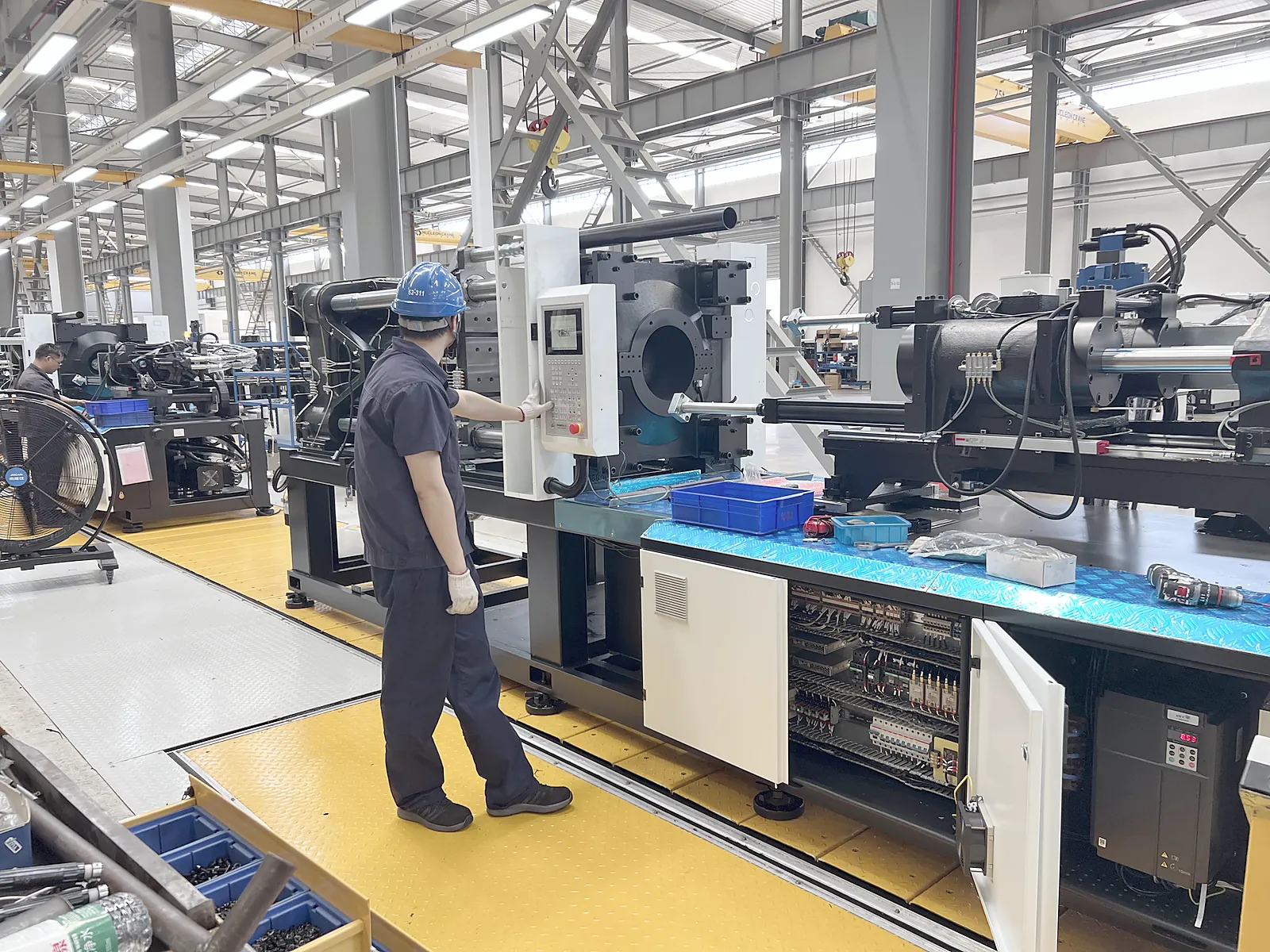
Installation, commissioning and operator training are available as an optional service. The service scope is defined and quoted with your project.
Project timeline
- Order and design confirmation
- The crate drawing, mold design and machine configuration are confirmed.
- Machine and mold build
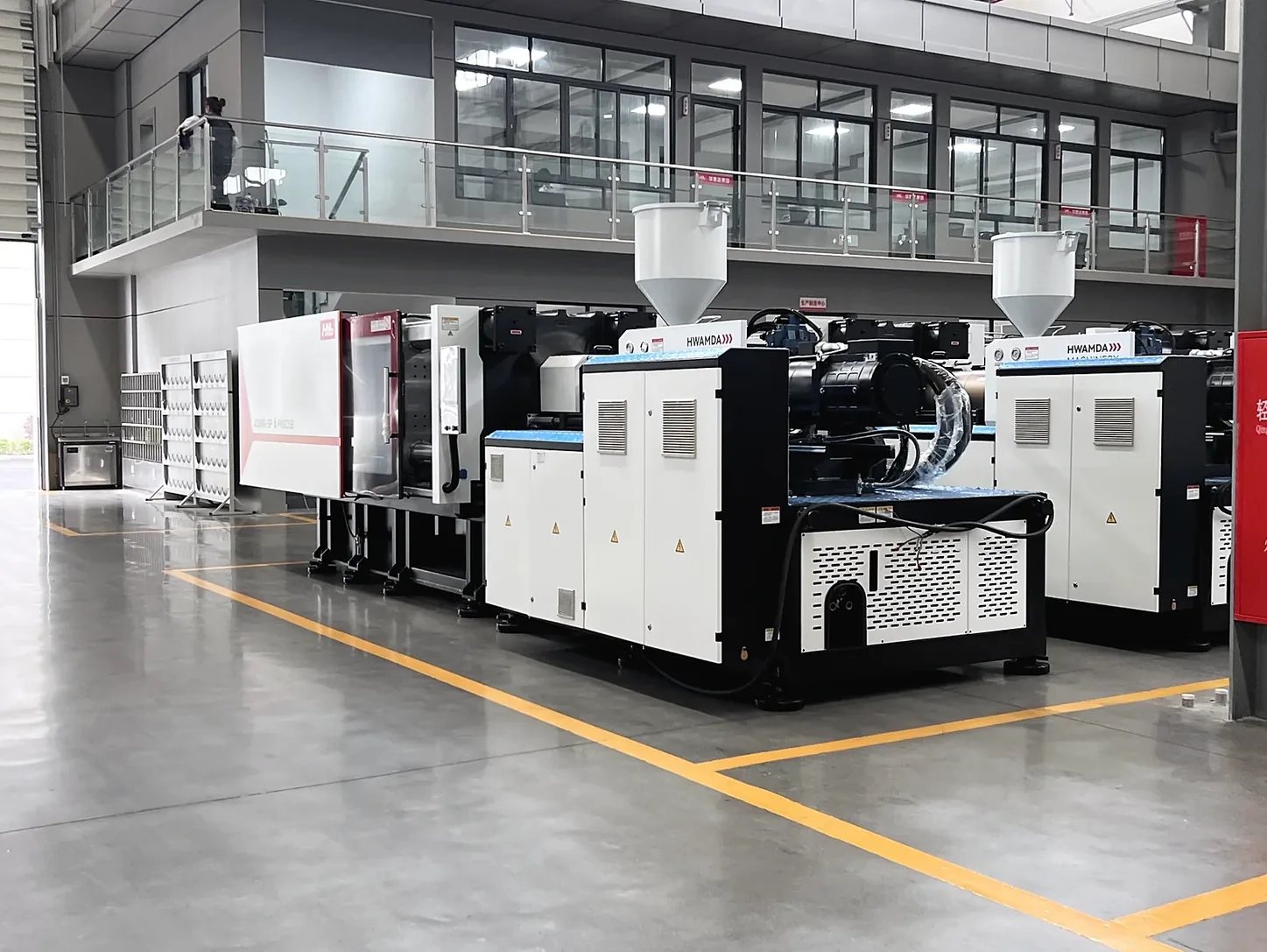
- Typical lead time is 60 working days for the FCII machine and 60 working days for the crate mold.
- Mold trial and sample approval
- The mold is trial-run before shipment, and samples are sent to you for confirmation.
- Shipping
- The machine, mold and selected auxiliaries are packed and shipped to your plant.
- Installation and start-up
- Optional on-site installation, commissioning and operator training.
Planning output
A simple estimate helps size the project:
- Per hour
- 45 s cycle and one cavity: 80 crates per hour.
- Per year
- 22 hours a day for 300 days: about 528,000 crates, before mold changes and maintenance.
- What changes it
- More cavities or a shorter cycle change the result directly, so the cycle target and mold concept are set together.
Site requirements
Prepare the site before the equipment arrives. Your proposal states the values for the selected line.
- Power
- Installed power for the machine and auxiliaries. The FCII specification table lists pump motor and heater power for each model.
- Cooling water
- Water supply for the mold, the hydraulic oil cooler and the chiller.
- Compressed air
- Air for the robot, the loader and any pneumatic mold functions.
- Floor space and lifting
- Machine footprint, aisles and storage space, and a crane rated for the mold weight.
- Operators
- Staff per shift for machine operation, quality checks and packing.
How to start
Send the crate drawing or photos, outside dimensions, target weight, material grade, load or stacking requirements, mold status and output target. Existing molds can be reviewed using their dimensions and weight.
FAQ
Frequently asked questions
Which machine size is used for a standard fruit crate?
Most standard produce and beverage crates fall in the HMD450–HMD580FCII range. The final model depends on crate size, weight, material and mold dimensions.
Should crates be molded in HDPE or PP?
HDPE is preferred for cold-chain and beverage crates because of low-temperature impact strength; PP is common for produce crates and turnover boxes.
Can recycled material be used for crates?
Yes, many crates use recycled PP or HDPE blends. Melt filtration, consistent flow and color matching should be planned with the material supply.
Do you supply crate molds as well as machines?
Yes. Crate molds are matched to the FCII machine as part of the plastic crate mold solution.
What information do you need to recommend a crate machine?
Crate drawing or photos, dimensions, weight, material, mold data and target output.
Which auxiliary equipment is included in a crate line?
The FCII machine and the crate mold form the core of the line. Loaders, dryers, color dosers, cooling equipment, granulators, robots and conveyors are optional and selected for your project.
Is installation and training included?
Installation, commissioning and operator training are available as an optional service and are quoted with your project.
How long does the crate mold take?
The typical crate mold lead time is 60 working days, followed by a trial run and sample confirmation before shipment.
How long from order to production?
Typical lead time is 60 working days for the FCII machine and 60 working days for the crate mold. The mold trial, sample confirmation and shipping follow; transit time depends on your destination.